Table of Contents
Why 'Just Post More' Is the Worst Marketing Advice (And the Strategic Alternative That Actually Works)
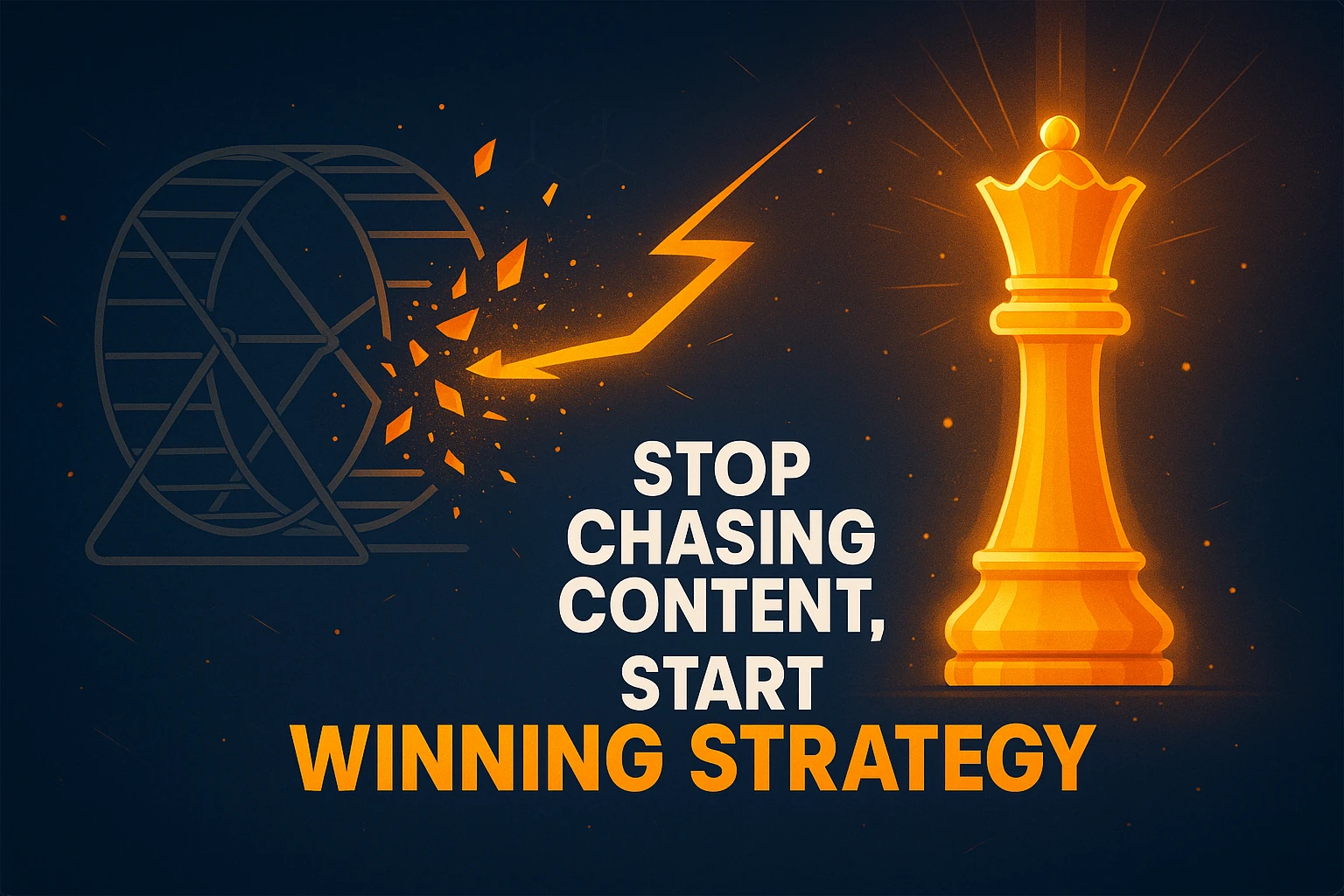
The exhausting content treadmill is killing your business. Here's how to get off it.
You know that sinking feeling when you've been posting religiously for months, churning out content like a machine, and your business growth looks... exactly the same?
I've been there. We've all been there. Someone (usually with the best intentions) looks at your stagnant metrics and delivers the most common piece of marketing wisdom ever dispensed: "Just post more."
More Instagram stories. More LinkedIn articles. More TikTok videos. More, more, more.
Here's what I wish someone had told me years ago: that advice cost me more time, energy, and opportunity than any other single piece of business guidance I've ever followed. Because here's the uncomfortable truth – more content doesn't grow a business. A real strategy does.
And the difference between the two? It's everything.
The Market-Message-Media System That Actually Works
Think about this for a second: Google's own research shows that customers need an average of 7 hours of engagement across 11 touchpoints in 4 different locations before they're ready to buy. That's not random exposure – that's strategic omnipresence.
But here's where most people get it wrong. Omnipresence isn't about being everywhere. It's about being everywhere your customers are. And that's a very big and very important difference.
The framework that changed everything for me (and helped me make millions without doing more) is what I call the Market-Message-Media System. It's deceptively simple, but most businesses get the order completely backwards.
First comes market – and I mean knowing your ideal customer so well it's borderline creepy. We're talking about understanding not just their demographics, but their miracles and miseries. What keeps them up at night? What would make them jump out of bed in the morning? Without this foundation, you're essentially shouting into the void, hoping someone, somewhere, might care.
The message component is where things get interesting. Your customers don't actually care about you, your business, or your products or services. Harsh? Maybe. True? Absolutely. What customers really care about is how your business can help them solve their problems. This is the difference between selling vitamins and selling painkillers – one is nice to have, the other is essential.
Finally, there's media selection, and this is where the emergency plumber versus vacation package analogy becomes crucial. If you're the plumber, your customers are actively searching for solutions at 2 AM with water flooding their basement. They're in search mode. But if you're selling vacation packages, people aren't frantically Googling "beach trips" at midnight – they're scrolling through discovery-based platforms, dreaming about their next escape.
The magic happens when these three elements work together in sequence. Each step informs the next, creating a coherent strategy instead of random acts of marketing.
Why This Approach Actually Works
I know a business owner who was posting 15 times a day across six platforms and wondered why she was exhausted but not profitable. She was optimizing for activity instead of strategy.
The psychological principle behind strategic omnipresence is something called the mere exposure effect – we develop preferences for things we're familiar with. But here's the key: that familiarity needs to happen in the right contexts, with the right message, for the right people.
When you nail your market first, everything else becomes easier. Your message becomes laser-focused because you know exactly whose problem you're solving. Your media selection becomes obvious because you understand whether your customers are hunters (actively searching) or browsers (passively discovering).
So here's my advice: Start with an audit. Look at your current content and ask yourself – does this have a clear audience and objective, or am I just feeding the content machine?
Then build that borderline creepy customer profile. Interview your best clients. Figure out what problems you solve that feel like painkillers, not vitamins. And choose 1-3 platforms where your people actually spend time, rather than trying to be everywhere at once.
The goal isn't to post more. It's to post strategically.
The Real Cost of Getting This Wrong
Every day you spend creating random content is opportunity cost. You're competing on volume when you should be competing on value. You're building a house without a foundation and wondering why it keeps falling down.
But get this right? You build a sustainable system that works consistently, generates clear ROI, and positions you strategically in the market while your competitors exhaust themselves on the content treadmill.
The choice is yours: you can keep posting more, or you can start posting smarter.