Table of Contents
The 5-Minute Buyer Psychology Pattern That Doubled My Close Rate: Why Every Sales Conversation Reveals a Psychological Fingerprint
The hidden psychological patterns that separate 45% closers from the 20% majority
I was shopping for business insurance last year and had two completely different experiences that changed how I think about sales forever.
The first broker launched into his standard pitch the moment I picked up the phone. Features, benefits, policy comparisons, competitive rates. Classic sales playbook stuff. It felt like being hit with a fire hose of information I didn't ask for.
The second broker? He asked me three questions about my business, listened to how I'd been researching options, and then completely changed his approach within ten minutes. Instead of educating me, he confirmed what I'd already figured out and closed me in one call.
That second broker was unconsciously reading something I didn't even know I was broadcasting: my buyer psychology. And once you learn to see these patterns, everything changes.
Here's what I discovered: every prospect reveals their psychological fingerprint within the first five minutes of talking to you. Miss it, and you'll spend weeks chasing the wrong approach. Read it correctly, and you can more than double your close rate while shortening your sales cycles dramatically.
The 3-Type Buyer Psychology Pattern
Think about this for a second: trying to sell to every kind of buyer the exact same way is like giving every plant the same amount of water and sunlight. Some are going to thrive, some are going to drown, and some will just wither away.
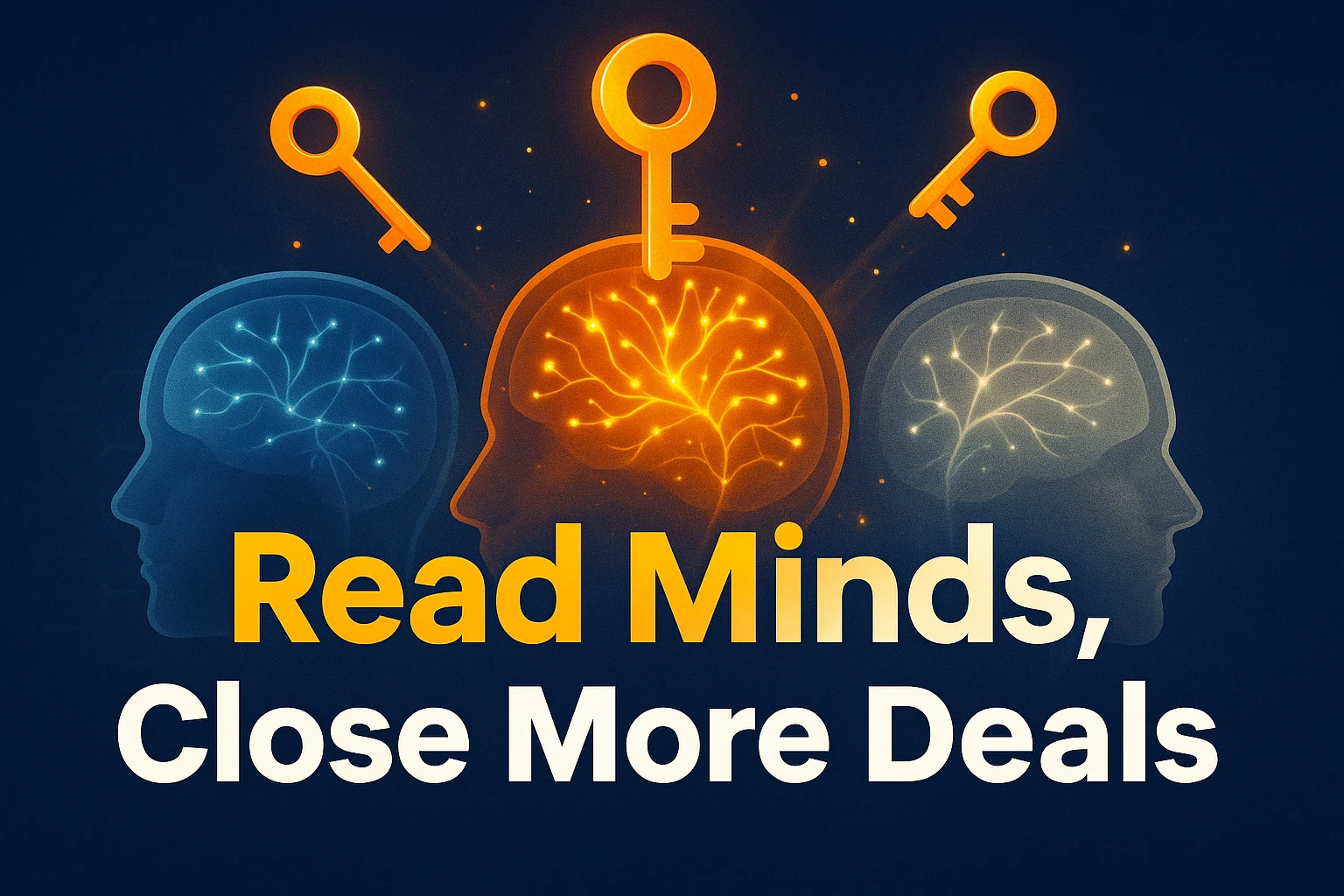
There are three distinct psychological types that show up in every sales conversation, and each one requires a completely different approach.
What makes someone a Validator? They've already sold themselves. The decision is basically 80% made, and they just need you to confirm they're not making a mistake. These prospects ask hyper-specific implementation questions like "Do you use Slack or email for client communications?" They're not gathering general information, they're checking implementation details because they've done their homework.
Then there are the Investigators. These prospects aren't shopping for solutions yet; they're studying the problem. When someone says, "I keep hearing about marketing automation, but I don't really understand what it means," they're telling you they're a student before they're a buyer. They need to comprehend the mechanisms before they can commit.
And here's where most salespeople get it wrong: Skeptics aren't skeptical about your solution. They're skeptical about their own ability to get results. When a prospect says, "I've hired three agencies before and none of them worked. I don't think my industry is suited for digital marketing," fear is stronger than desire. They're not questioning your competence, they're protecting themselves from disappointment.
The fatal mistake? Using the wrong approach actively hurts your chances and can turn a ready buyer into a lost prospect.
Reading the Patterns in Real Time
I can predict with around 85% accuracy who's going to buy from me and when within the first 5 minutes of talking to them, and it all comes down to three diagnostic questions.
First: "What's got you looking into this?" Listen carefully to their response. Validators will reference specific research they've done or mention they've narrowed it down to a few options. Investigators will describe the problem they're trying to understand. Skeptics will mention past failures or express doubt about whether anything can work for their situation.
Second: "What have you tried before?" This is where the psychological truth emerges. Don't rush to the next question, let the silence breathe. Their first answer is usually rehearsed, but when you stay quiet, they'll add the revealing details that show you their real psychological state.
Third: "What would the ideal solution look like?" Validators get specific about features and implementation. Investigators ask clarifying questions about how things work. Skeptics focus on risk mitigation and guarantees.
I know a sales rep who lost a $50,000 deal by treating a Skeptic like a Validator. Instead of addressing the prospect's fear and building trust, he pushed for the sale. The prospect said they "needed to think about it" and then ghosted after two weeks of aggressive follow-up. Wrong psychology, wrong approach, deal lost.
But when you get it right? My close rate went from 20% to 45% in 90 days. Sales cycles shortened dramatically, some Validators closed in one call instead of dragging out over two weeks. And here's the kicker: clients got better results because they were sold in alignment with their decision-making style.
The Practical Application
So if I were to give you one piece of advice, it would be to start with your last ten sales conversations. Go back through your notes and categorize each prospect by type. Track your close rates by category. I guarantee you'll discover you naturally attract one type but struggle with the others.
The first practical step? Stop trying to use the same pitch for everyone.
Validators need confirmation and specifics, give them implementation details and validate their research. Investigators need education and logic, take the time to explain how things work before you ever mention pricing. Skeptics need trust-building and risk reversal, address their fears first, then show them success stories from people just like them.
The biggest mistake is treating Investigators like Validators (rushing them into a decision) or treating Skeptics like Investigators (overwhelming them with information when they need reassurance).
The Bottom Line
Your prospects are already telling you exactly how to sell to them, you just need to learn their language.
Every sales conversation reveals a psychological fingerprint within five minutes. Read it correctly, and you'll stop wasting weeks chasing the wrong prospects with the wrong approach while watching ready buyers slip away.
Because here's the truth: the difference between 20% and 45% close rates isn't about having better sales skills. It's about recognizing that all buyers are not created equal, and adapting accordingly.