Table of Contents
The Psychology Gap: Why Customer Research Lies to You (And What to Track Instead)
Your customers aren't lying to you, they just don't know themselves as well as they think they do.
You've been there. I know you have because every business owner I've ever met has lived this nightmare at least once.
You talk to your customers. You ask them what they want. They get excited, give you detailed feedback, tell you exactly what features would make them buy. So you build it. You pour weeks or months into creating the "perfect" solution based on their input.
Then you launch to... crickets.
The enthusiasm vanishes. The people who swore they'd buy suddenly have concerns. The features they demanded go unused. And you're left wondering what the hell just happened.
Here's what happened: you fell into the psychology gap.
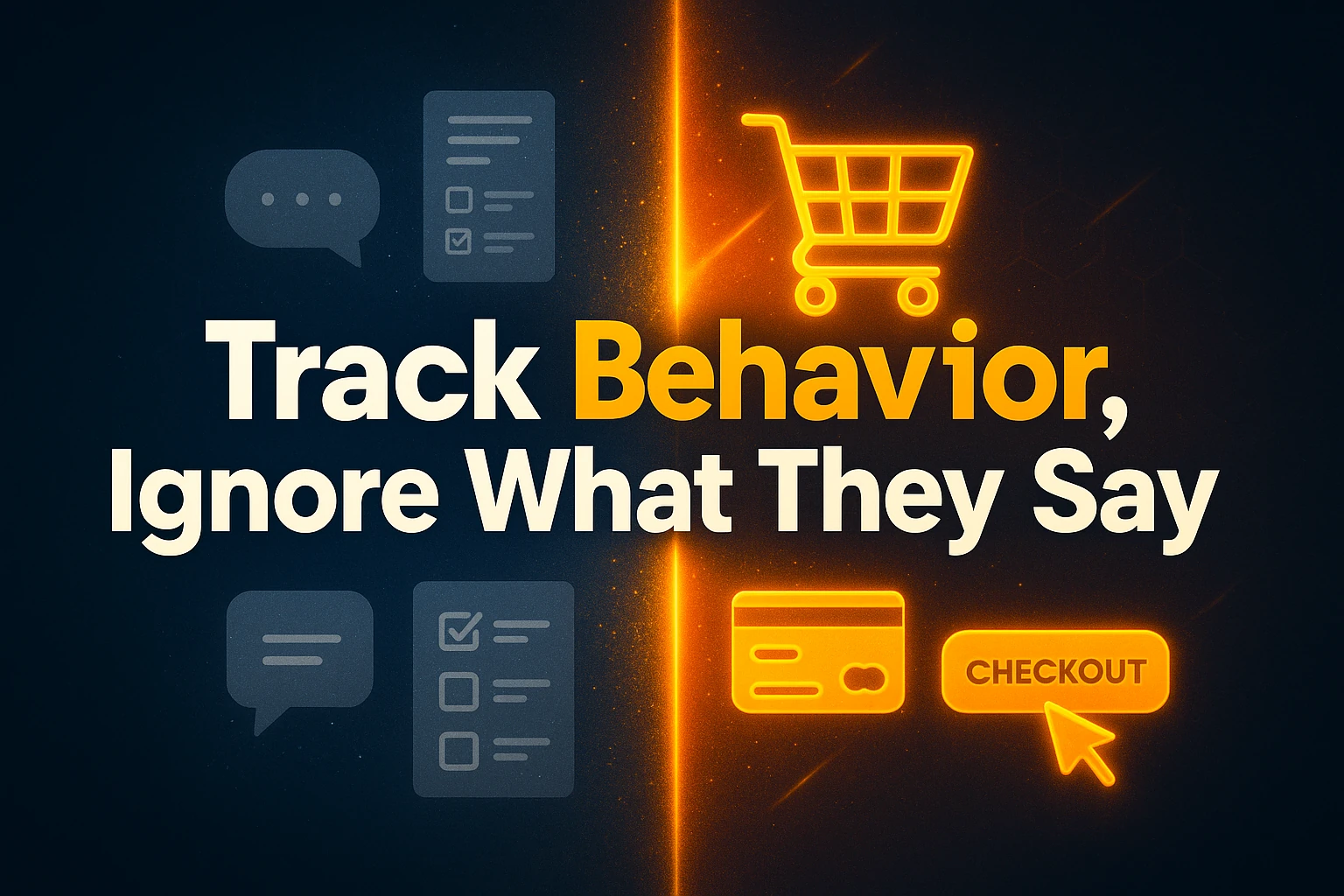
That gap between what people consciously think they want versus what they unconsciously respond to and actually buy. It's not that your customers were lying, they genuinely believed they knew what they wanted. But people don't buy what they say they want. They buy based on completely different psychological triggers they're not even aware of.
The 5 Psychology Patterns That Actually Drive Buying Behavior
Traditional market research treats customers like perfectly rational beings who understand their own motivations. But after analyzing hundreds (probably thousands) of sales conversations across different businesses, I've discovered something fascinating: there are five predictable patterns where stated preferences completely diverge from actual buying behavior.
Think of it like this: asking someone what they want is like asking them to predict how they'll feel about a movie based on the trailer. They'll give you an answer, but it won't predict whether they'll actually enjoy sitting through the full experience.
The first pattern emerges when you compare what prospects claim they want in surveys versus what they actually ask during sales conversations. People will tell you they want CRM integration, advanced analytics, or whatever technical feature sounds impressive. But when they're ready to buy? They ask three questions: "How does this actually work in practice?" "What if it doesn't work for me?" and "How long until I see results?"
Those aren't feature questions. They're psychology questions about process confidence, risk reversal, and timeline clarity.
Here's where it gets really interesting, what content people consume reveals a completely different psychology than what they say interests them. I learned this the hard way with my own YouTube channel. The videos I expected to perform well (the ones people specifically requested about tactics and technical strategies) got mediocre views. Meanwhile, the content I almost didn't publish, stuff about why businesses fail at marketing, drove the most qualified leads and client conversations.
People say they want tactics, but they respond to validation and problem diagnosis. Always.
The timeline pattern might be the most expensive misconception in business. Your prospects will tell you they're "ready to get started now" or that they "make decisions quickly." Then they take 30-60 days to actually buy, even for purchases they claim are urgent. I doubled my conversion rates when I stopped fighting this psychology and built my sales process around their actual decision timeline instead of their stated urgency.
But here's the pattern that really separates successful businesses from struggling ones: understanding which objections predict purchases versus which ones predict people walking away. "I'm not sure I can do this" converts at a high rate because it shows interest plus genuine concern. "I need to talk to my partner" almost never converts because it's polite avoidance disguised as process.
The final pattern happens after the sale, and it's perhaps the most revealing. What customers actually use and get value from rarely matches what they said they needed when buying. You sell on outcome X, they buy for feature Y, then get their real value from component Z. If you build features based on customer requests without tracking actual usage, you'll waste enormous resources on unused functionality.
Why This Changes Everything
I know a consultant who built an entire Facebook ads course based on what his audience told him they wanted: technical training on targeting, creative optimization, and platform mechanics. The course had mediocre sales despite addressing every requested feature.
Then he did a behavioral analysis. He looked at what content actually drove engagement, which emails got responses, what questions prospects asked in sales conversations. The data revealed something surprising: his audience responded most strongly to content about marketing strategy and business fundamentals, not tactical execution.
So he built a funnel strategy course instead. Same audience, same marketing channels, but aligned with actual psychology instead of stated preferences. It outsold everything else by a significant margin.
This isn't just about product development. When I restructured my entire sales process to serve actual psychology instead of trying to create urgency and close fast, my conversion rates improved significantly. We're talking double.
So if I were to give you one piece of advice, it would be to start tracking behavioral data right now. Create a simple spreadsheet with customer names, contact dates, questions they asked, content they consumed, their actual decision timeline, and purchase amounts. But here's the critical part: only analyze your top 10-20% of customers. The patterns that drive great customers are completely different from average customers, and most businesses waste time trying to appeal to everyone instead of doubling down on what attracts their best clients.
The first practical step? Stop trying to do everything at once. Pick one pattern and track it for 30 days. Are your best prospects asking price questions or process questions? Are they consuming tactical content or strategic content? Do they buy quickly or take weeks to decide?
The only behavior that matters is actual buying behavior. If someone says, "I would definitely buy this," your next question should be, "Great, here's where you can buy it right now."
The Real Cost of Getting This Wrong
Market psychology changes continuously, and businesses that don't adapt get disrupted by those who do. Your competitors aren't just fighting for market share, they're fighting for psychological real estate in your customers' minds.
The companies that win aren't the ones with the best surveys or the most comprehensive focus groups. They're the ones who understand the psychology gap and build everything around actual buying behavior instead of stated preferences.
Because at the end of the day, people don't buy what they say they want. They buy what they actually want, they just don't know how to tell you what that is.