Table of Contents
The Death of Polished Marketing: Why Raw, Unedited Content Is Crushing Million-Dollar Production Values
Your expensive video campaigns are failing for a reason you won't want to hear
Picture this: Your team just wrapped a three-month video campaign. Professional crew, perfect lighting, multiple takes, post-production magic, the whole nine yards. Budget? Let's just say it could fund a small startup.
Meanwhile, your intern shoots a 30-second testimonial on their iPhone during lunch break. Shaky camera, imperfect audio, zero editing.
Guess which one drives more conversions? (If you're getting that sinking feeling in your stomach right now, you're not alone.)
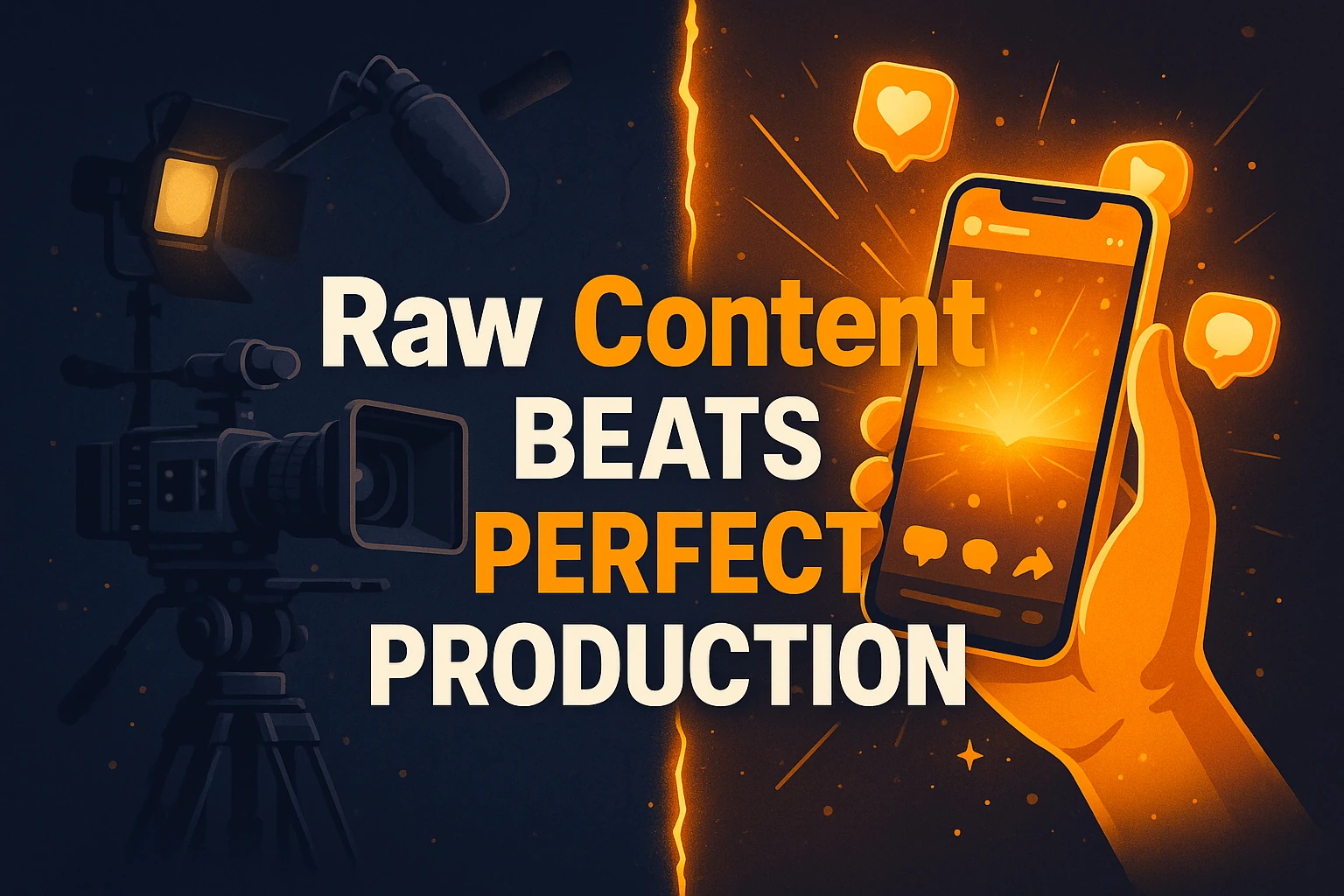
I've been watching this phenomenon destroy marketing budgets across the industry, and frankly, it's time someone said it out loud: The more money you spend making your content look "professional," the worse it's probably performing.
The Production Paradox Hierarchy
What if I told you that marketing success follows an inverse pyramid? The foundation, where all the magic happens, sits at the bottom with the roughest, most unpolished content. And at the tippy-top? Your beautifully crafted, expensive disasters.
I know an agency owner named Fraser who creates over 1,000 ads every month for seven, eight, and nine-figure brands. His biggest revelation? "The ones that we spend the most time on are the ones that perform the least."
Let me break down what he calls the Production Paradox Hierarchy, because it's going to flip everything you think you know about content creation.
Raw and authentic content sits at the foundation. These are the videos that look like they could've been shot by your neighbor, because that's exactly what consumers want to see. Fraser's top-performing ad for Humantra (an electrolyte drink) was literally filmed with the founder "up against the wall, super organic, holding his phone and just saying what he loves about the product."
Why does this work so well? Because when someone scrolls through TikTok or Instagram, this content doesn't feel like an ad. It feels like genuine user-generated content they'd naturally encounter.
Then there's the middle tier: structured but natural content. Think planned messaging with deliberate imperfections. Maybe it's your founder calling customers directly, or employees sharing their genuine experiences. It has a backbone, but it doesn't scream "MARKETING DEPARTMENT WAS HERE."
And at the very top, where performance goes to die, sits your high-production, polished content. The kind that marketing teams have been trained to create for decades. Professional lighting, multiple camera angles, perfect audio, seamless editing.
Here's the brutal truth: "Consumers are smart. They understand what they're watching. They understand this isn't a random person." The moment your audience recognizes something as a traditional ad, their brain's BS detector activates and they scroll right past.
It's like we've been building our marketing strategy upside down this entire time.
The Raw Reality of What Actually Works
The proof is everywhere once you start looking for it. Fraser's agency has data from thousands of campaigns, and the pattern is undeniable. That "UGC that used to work 2 or 3 years ago where it was very edited? It just doesn't really work anymore."
But here's what does work: Content that looks like it belongs in someone's organic feed.
So if I were to give you one piece of advice, it would be to start with this simple audit. Go through your last six months of content campaigns. Sort them into three buckets based on production level. Now compare the performance metrics.
I'm willing to bet you'll find the same inverse relationship Fraser discovered.
The first practical step? Stop trying to make everything perfect. If you're a founder who's camera-shy, Fraser suggests recording a voice note and putting B-roll over it. The goal isn't to win a cinematography award, it's to feel genuine.
Second, build yourself an archive of raw material. Real customer reactions, employee testimonials, behind-the-scenes moments. These become your content goldmine because they're naturally authentic.
And here's where it gets interesting: You can scale this approach using AI tools like 11 Labs for voice work, but (and this is crucial) don't let efficiency turn into "AI slop." The copy still needs to be genuine, the messaging still needs to resonate.
The Expensive Lesson Everyone's Learning Too Late
In 2025, making ads is harder than ever. Every single day, costs keep rising. People are scrolling quicker than ever. And capturing their attention is almost impossible with traditional approaches.
While you're spending weeks perfecting that glossy campaign, your competitors are connecting with customers using content that actually stops the scroll. They're building trust through authenticity while you're building skepticism through polish.
The window for authentic content advantage is narrowing as more brands figure this out. But right now? Right now there's still time to flip your entire approach and start winning with less.
Here's your bumper sticker moment: The best marketing doesn't look like marketing at all.
Your move.