Table of Contents
The Psychology of Buyer Speed: Why Fast Buyers Aren't Always Good Buyers (And Slow Buyers Aren't Always Bad)
The counterintuitive truth about prospect behavior that's costing you revenue and sanity
Picture this: You're celebrating because someone just signed on the spot. No hesitation, no pushback, just pure enthusiasm. Three weeks later, they're demanding a refund, claiming your service "requires more work than I thought." Meanwhile, that prospect who took six months to decide? They just sent you their third referral this year.
If this sounds familiar, you're not alone. Every salesperson has lived this nightmare, celebrating the wrong wins while almost walking away from their best future clients. I've watched this pattern destroy revenue projections and drive sales teams to the brink of burnout.
Here's what's really happening: We're using speed as a proxy for quality, when the two have absolutely nothing to do with each other.
The 4-Type Buyer Psychology Matrix
After working with companies like Google, Amazon, and Meta over the past decade, I've watched thousands of buying decisions play out in real time. What I discovered changed everything about how I think about prospects.
There are actually four distinct types of buyers, and understanding them is the difference between a 32% close rate and a 78% close rate (more on those numbers in a minute).
Think of it like this: Prepared buyers ask about the foundation before they move in. Desperate buyers just want a roof, any roof, and then they're going to blame you when it leaks.
The first type, and these are your absolute dream clients, are the Prepared Fast Buyers. They decide quickly, but not because they're impulsive. They decide quickly because they've done their homework. I had one client who signed the same day we talked, but during our conversation, he asked 14 specific questions about implementation timelines, potential roadblocks, and exactly how our process worked. He wasn't listening to buy; he was listening to understand. That client stayed for 36 months.
On the flip side are Desperate Fast Buyers, and these are the ones that'll keep you up at night. They're ready to sign immediately, but their questions give them away. "How fast can I see results?" "What's your guarantee?" They're not curious about the process, they just want the outcome. That same-day signer I mentioned earlier who refunded? Classic desperate buyer.
Now, here's where it gets interesting. What about prospects who take forever to decide?
Due Diligence Slow Buyers are worth every minute of wait time. They use time productively, consuming your content between calls, making progressive conversations, and having real decision timelines. I've had clients take six months to sign who then stayed for years and became referral machines.
But Stuck Slow Buyers? They're just spinning their wheels. Three months of nurturing, and they're still asking "How does this work?" They ask the same questions repeatedly, have no real timeline, and often lack the authority to make decisions anyway.
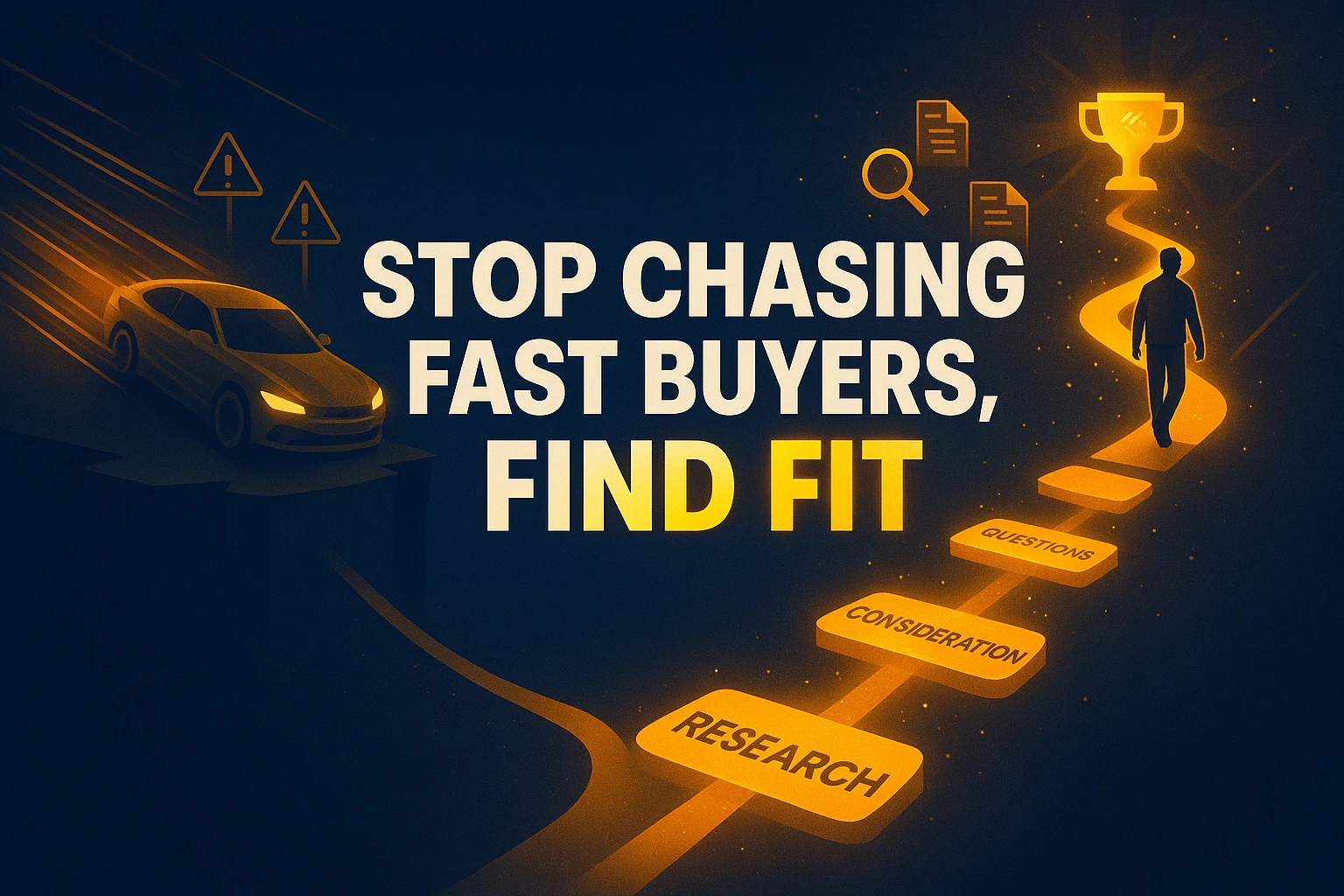
The revelation here is that speed tells you nothing about buyer quality. What matters is preparation level and research behavior.
The Pre-Education Solution
So how do you accelerate the good slow buyers while filtering out the bad fast ones? I stumbled onto the answer accidentally when I got tired of being a human FAQ machine.
I started tracking every question prospects asked me, and here's what blew my mind: 80% of questions fell into just seven categories. So I created comprehensive content answering each one, process videos, responsibility breakdowns, case studies by industry, even "when this doesn't work" pieces.
Then I made consuming this content mandatory before any discovery call.
The results were immediate and dramatic. My close rate jumped from 32% to 78%. My refund rate dropped from 13% to under 1%. Call length decreased from 45 minutes to 25 minutes because prospects came prepared with specific, application-focused questions.
But here's the beautiful part: 40% of unqualified prospects self-filtered out rather than consume the content. The 60% who remained? They came to calls prepared and ready to have real conversations about implementation.
If I were to give you one piece of advice, it would be to start tracking your prospect questions this week. Create a simple document and log every question you get asked. Within a month, you'll see the patterns emerge.
The first practical step? Stop trying to educate prospects on calls. Create the content once, require it upfront, and use your call time for what actually matters, understanding their specific situation and determining fit.
You can also implement a real-time categorization system. Within the first 10 minutes of any call, you should know if you're dealing with a green light (references content, asks application questions, has authority), yellow light (unprepared but educable), or red light (won't consume content, seeks magic solutions).
The Speed Trap's Real Cost
Here's what most people don't realize: every minute you spend with the wrong prospect is a minute you're not spending with the right one. Bad clients don't just refund, they consume resources that could serve clients who'll stay for years.
Your best clients take longer to buy because they're doing proper due diligence. But if you pre-educate them with content, they can move fast while still being thorough.
The psychology of buyer speed isn't about fast versus slow, it's about prepared versus desperate, progress versus stuck. Master this distinction, and you'll never celebrate the wrong signature again.