Table of Contents
The $8 Million Simplicity Principle: Why 'More Marketing' is Killing Your Conversions
How one basic sales page outperformed every complex funnel, automation sequence, and AI hack in the book
Picture this: You're drowning in marketing. Your dashboard looks like NASA Mission Control with seventeen different automation sequences, AI-powered email writers, retargeting campaigns across four platforms, and a funnel so complex it needs its own flowchart just to understand it.
Meanwhile, your conversions are flatlining.
Sound familiar? You're not alone. The "AI smoke bomb" has everyone convinced that more sophisticated marketing automatically equals better results. But what if I told you the opposite was true? What if the very complexity you're building is systematically destroying your ability to convert prospects into customers?
I've been studying this phenomenon for years, and the data tells a fascinating story. While everyone else was building monster funnels and chasing the latest marketing hack, simple systems were quietly generating millions. In fact, I know of one business that generated over $8 million using nothing more than a basic sales page formula – no webinars, no complex sequences, no AI wizardry. Just fundamentals executed well.
Here's what's really happening in marketing right now.
The 5 Rules of High-Converting Marketing
Think of marketing like cooking. You can have the fanciest kitchen gadgets in the world, but if you don't understand the basics of flavor and technique, you're still going to serve terrible food. Marketing works the same way.
The truth is, there are exactly five principles that determine whether your marketing converts or flops. Master these, and complexity becomes optional. Ignore them, and no amount of sophisticated tactics will save you.
What's your offer actually selling? Most people get this fundamentally wrong from day one. People don't buy products or services – they buy outcomes or a better version of themselves. Your offer isn't your coaching program; it's the transformation your clients experience. It's not your software; it's the time and frustration it saves. Get this wrong, and it doesn't matter how many AI hacks you use or how fancy your funnel is – customers simply won't want what you're selling.
Here's where things get interesting: personality over perfection wins every time. Perfect doesn't convert because perfect is boring. There's actually a psychological principle called the uncanny valley effect that explains why AI-generated content often feels "creepy" to readers. Humans have an internal alarm system that detects when something is too polished, too perfect. Your quirks, your unique phrasing, even your minor imperfections – these create connection and trust in ways that flawless copy never can.
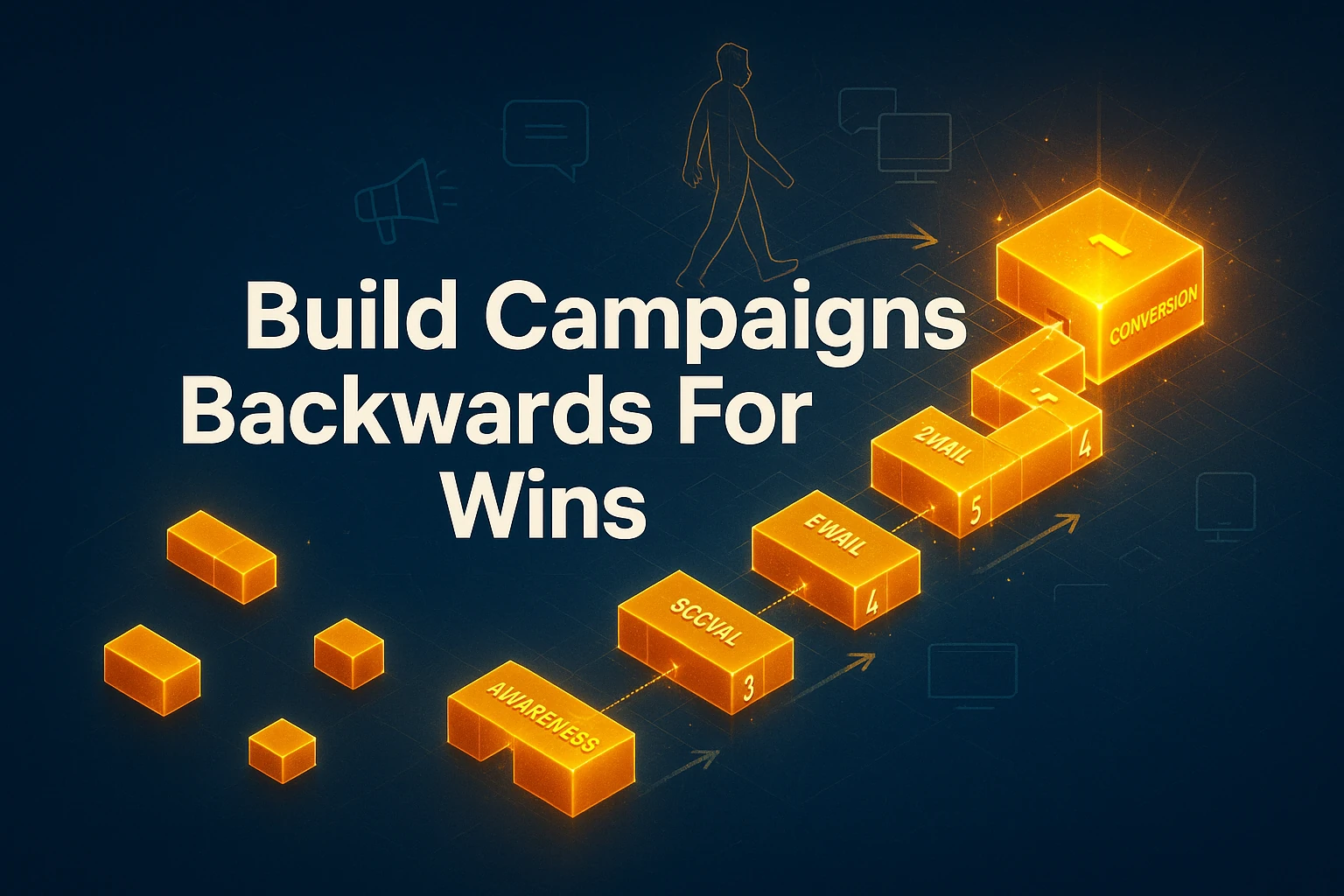
And then there's the simplicity principle that changes everything: your funnel should have exactly three parts. Lead magnet. Email sequence. Sales page. That's it. I've seen businesses obsess over building these elaborate monster funnels with multiple upsells, downsells, and branching paths that look impressive but consistently underperform against simple, linear systems.
Now, about AI – since everyone's asking. The secret is using it as your brainstorm buddy, not your replacement writer. Most people make one of three mistakes: they rely on it too heavily, avoid it entirely, or half-heartedly dabble without any real strategy. Think of AI as that smart friend who helps you organize your thoughts and research ideas, but you still need to do the actual thinking.
Finally, and this might sound contradictory: structure enables creativity. The most successful marketers I know follow proven frameworks religiously, but they inject their personality throughout every section. They understand the psychology behind why each part of a sales page works, which allows them to be creative within that structure.
The Application: Why This Actually Works
I know a business owner who spent two years building what she called her "marketing machine." Multiple lead magnets, complex automation sequences, AI-powered personalization – the works. Her conversion rates kept declining.
Then she stripped everything back to basics. One powerful offer, clearly defined. A simple email sequence that felt like personal messages. A sales page that sounded exactly like how she talked to clients on the phone.
Revenue doubled in six months.
The reason is psychological. When you're drowning in marketing complexity, you lose focus on what actually moves the needle. You start optimizing for metrics that don't matter. You create busy work that feels productive but doesn't drive results.
So if I were to give you one piece of advice, it would be this: audit your current marketing through the lens of these five rules. Start with your offer – can you clearly articulate the specific transformation your customers get? If not, nothing else matters.
The first practical step? Stop trying to do everything at once. Pick your three-step funnel components and make them excellent before you even think about adding complexity.
And here's the thing about AI – use it to help you think through your message, research your audience, or structure your content. But when it comes time to write the actual copy that connects with human beings, that's on you.
The Bottom Line
While your competitors are still chasing the latest marketing automation tool or AI shortcut, you have a massive opportunity. Simplicity isn't just easier to execute – it's a competitive advantage disguised as common sense.
The businesses winning right now aren't the ones with the most sophisticated systems. They're the ones that never forgot the fundamentals in the first place.
Good marketing is simple. Everything else is just expensive distraction.