
Table of Contents
The Hidden Metric Killing 90% of Digital Marketing Campaigns: Why Your 'Data-Driven' Decisions Are Actually Destroying Performance
How conversion delay ignorance creates a cycle of campaign carnage that even the smartest marketers fall into
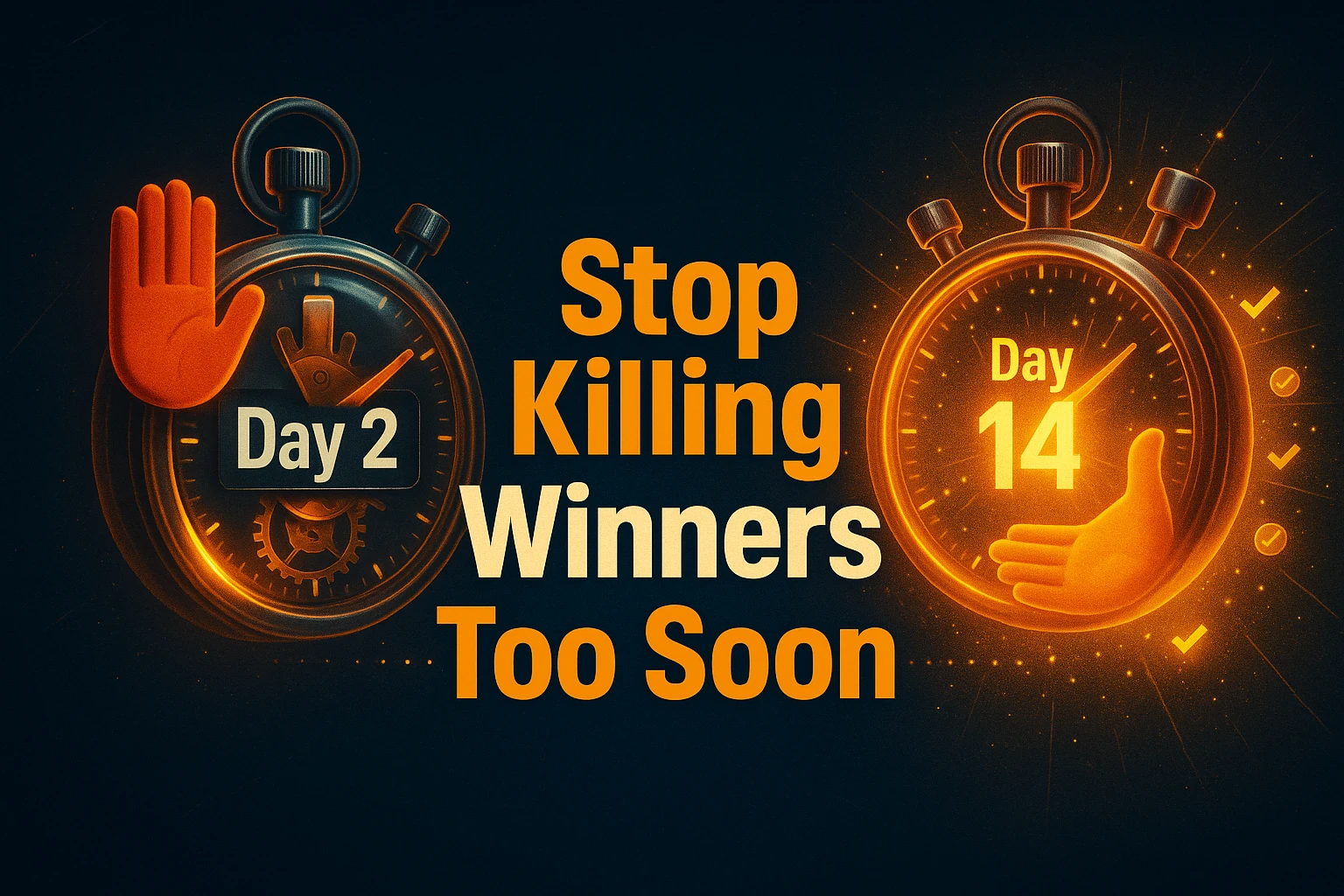
Picture this: You launch a Facebook campaign on Monday. By Wednesday, the numbers look terrible. Cost per click is high, conversions are nowhere to be seen, and your boss is asking questions. So you do what any "data-driven" marketer would do - you pause the campaign and try something new.
Sound familiar?
Here's what probably happened next: You launched a fresh campaign on Thursday, saw similar poor performance by Saturday, and repeated the cycle. Meanwhile, that original Monday campaign? The one you killed? People who clicked on it actually converted on Sunday - right into Meta's 7-day attribution window. But you'll never see those conversions attributed back because you panicked and pulled the plug.
I can guarantee you that almost 90% of digital marketers don't understand the one metric that's silently destroying their campaigns: conversion delay. And the brutal irony? They call themselves "data-driven" while completely ignoring the most critical data point in their customer journey.
The Conversion Delay Assessment Framework: Your Campaign Autopsy Tool
Think of conversion delay like a delayed-release medication. The active ingredient (your ad) gets ingested immediately, but the effect doesn't kick in for hours or even days. Most marketers are checking the patient's pulse 30 minutes after administering the dose and declaring the treatment failed.
Let me break down what I call the Conversion Delay Assessment Framework - a four-step diagnostic that'll save you from killing your own winners.
The foundation starts with understanding your baseline delay measurement. I was analyzing Google Analytics 4 data for a client last month, and what I found was staggering: their average time between first visit and actual purchase was 4 days and 20 hours. Essentially five full days. But who waits 10 days to judge which creative is working? Who waits 10 days to see A/B test results on Meta? That's the biggest problem right there.
But here's where it gets really interesting (and where most marketers completely mess up): not all traffic sources behave the same way. When I segmented that same data by traffic source, Instagram traffic converted in 4 days, Facebook traffic took 8 days, and Google organic was fastest at 3 days. If you're optimizing Instagram and Facebook campaigns on the same timeline, you're essentially comparing apples to refrigerators.
The demographic breakdown reveals even more complexity. In that same analysis, I noticed females made purchase decisions faster than males, and users from India converted quicker than Americans, who typically took 8+ days or more. This isn't just interesting data - it's campaign-survival intelligence.
Finally, you need to calculate your optimization buffer by adding your platform's learning period to your conversion delay. So if your delay is 5 days and Meta needs 3-7 days to learn, you're looking at 8-12 days minimum before making any optimization decisions. Not the 2-3 days most marketers give their campaigns.
Stop the Campaign Carnage: Your Step-by-Step Recovery Plan
Here's where the rubber meets the road. I've seen agencies burn through six-figure budgets because they never took the time to understand their actual conversion timing.
The first thing you need to do is audit your conversion delay using Google Analytics 4. Set up a Full Path Exploration report, remove all events except first visit and purchase, enable "show lapse time," and use a maximum 2-month date range. (Don't go shorter - you'll get misleading data that'll send you down the wrong path.)
Next, segment everything. Break down your delay analysis by traffic source, gender, geography - whatever dimensions matter for your business. I know an agency owner who discovered their TikTok traffic converted 40% faster than their Facebook traffic, but they'd been applying the same optimization schedule to both platforms for months.
Then comes the math that'll save your campaigns: take your conversion delay and add your platform's learning period. That's your minimum campaign runtime before you touch anything. Period.
The disconnect between what Meta's attribution window captures (1-day view, 7-day click) and when marketers make optimization decisions is costing the industry millions. Let's say on day six somebody purchases your product - Meta will still count it because it falls within the attribution window. But the problem is you already paused the campaign and killed the creative on day three.
The Real Cost of Optimization Impatience
Stop calling yourself "data-driven" if you're ignoring the data that matters most.
Every optimization decision you make without understanding conversion delay is potentially destructive. You're not just wasting ad spend - you're training yourself to believe that winning strategies don't work, giving your competitors free advantages, and creating team stress over campaigns that were actually succeeding.
The opportunity cost here isn't just about individual campaigns. It's about building sustainable, scalable growth through patient, informed optimization decisions that let your actual winners prove themselves.
Your move: Go calculate your conversion delay right now. Your future campaigns (and your sanity) will thank you.