Table of Contents
The AI Layoff Paradox: Why Companies Are Firing Workers for Tech That Fails 97.5% of the Time
The gap between AI capabilities and corporate messaging reveals a troubling truth about modern layoffs
Picture this: You're in a high-stakes investor pitch for your startup. The room is full of potential backers who could change your company's future. You pull up your carefully prepared revenue projections, and right there in front of everyone, Claude, supposedly one of the world's most advanced AI models, can't add four simple numbers correctly.
That actually happened to me last month. And it got me thinking about something that's been bothering me for a while now.
We keep hearing about companies laying off thousands of workers because of "AI efficiency." UPS cut 14,000 management positions. Target restructured entire departments. The headlines scream about AI taking jobs. But here's what's driving me crazy: if AI can't handle basic math in a critical business moment, how exactly is it sophisticated enough to replace entire workforces?
The answer is simpler and more unsettling than you might think. It's not.
The Real Story Behind the Numbers
I've been digging into the actual data on AI performance, and what I found was staggering. Scale AI and the Center for AI Safety recently tested AI agents on 240 real-world projects from Upwork, the kind of work companies claim AI can now handle. Want to guess how many projects the top AI agent completed to an acceptable standard?
Six. Out of 240.
That's a 2.5% success rate. Put another way: AI fails 97.5% of the time when working alone on real-world tasks.
But wait, it gets worse. Out of $144,000 worth of work, these AI agents earned a grand total of $1,720. That's not automation, that's expensive failure.
So why are companies blaming AI for massive layoffs? MIT economist David Autor, who's spent over a decade studying automation, put it perfectly: "It's much easier for a company to say we're laying off workers because we're realizing AI related efficiencies than it is for companies to say we're laying people off because we're not that profitable or bloated or facing a slowing economic environment."
In other words, AI makes for great PR cover during pandemic over-hiring corrections.
The Expert vs. Assistant Dynamic That Actually Matters
Here's where it gets interesting, though. While AI working alone fails spectacularly, there's a completely different story when experts use AI as a tool. But understanding your future depends on grasping what I call the Expert vs. Assistant AI Impact Model.
Think about what happened to London cab drivers versus bookkeepers. Both faced technological disruption, but their outcomes couldn't have been more different.
London cabbies spent 3-4 years studying for "The Knowledge," memorizing every one of 25,000 streets, with a 70% dropout rate. Then GPS showed up. Overnight, anyone with a smartphone could navigate London better than most cabbies. That's what I call the GPS Effect: when technology replaces your core expertise, your value evaporates.
But bookkeepers? When computers took over calculations in the 1980s, something unexpected happened. Between 1980 and 2018, bookkeeper wages actually rose 40%. Why? Because computers handled the boring math, freeing bookkeepers to focus on analysis, judgment, and catching errors. That's the Bookkeeper Effect: when technology handles your routine tasks, your expertise becomes more valuable.
The critical question isn't whether AI will impact your job, it will. The question is whether you'll experience the GPS Effect or the Bookkeeper Effect.
And that depends entirely on whether you position yourself as the assistant or the expert.
How to Position Yourself on the Right Side
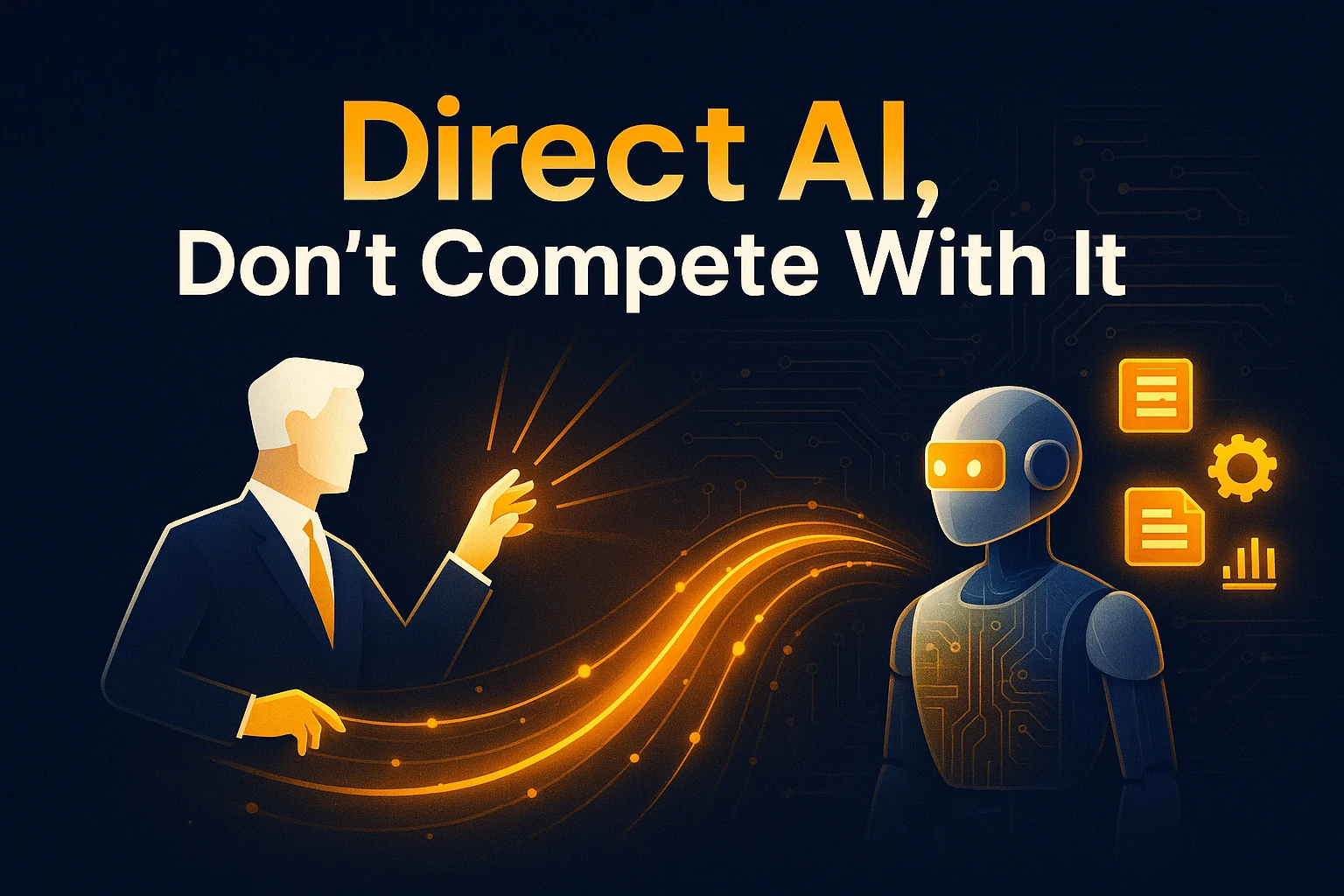
So here's my take: stop panicking about AI replacement and start thinking about AI direction. The professionals who thrive in this shift will be those who become AI-directing experts, not AI replacements.
If I were to give you one piece of advice, it would be to start with an honest audit of your current work. Ask yourself: what am I doing that requires genuine expertise, judgment, and error-catching? And what am I doing that's just routine execution?
The routine stuff? Let AI handle it (when it works, which remember, is only 2.5% of the time without oversight). Your job is to become the expert who can spot when AI goes wrong, redirect it when it fails, and add the context and judgment that makes the difference between a $1,720 disaster and actual business value.
I know agency owners who've started using AI for first drafts of client reports. Not because AI writes better, it doesn't, but because it handles the initial structure so they can focus on insight, strategy, and quality control. They're not competing with AI; they're directing it.
The first practical step? Stop trying to do everything manually and start practicing with AI tools. Learn their failure modes (trust me, there are many). Develop your verification processes. Because in a world where AI fails 97.5% of the time, the ability to direct it effectively isn't just valuable, it's essential.
The Window Is Closing
Here's the urgent reality: while companies aren't actually replacing workers with AI, they are using hiring freezes to quietly restructure. When junior employees leave, many companies aren't backfilling those roles. The assumption is that remaining team members can use AI to handle the extra workload.
That assumption only works if those remaining team members are experts who can direct AI effectively. If they're assistants trying to compete with AI, they're in trouble.
The question that will determine your career trajectory is this: Is AI automating your expert value or your boring routine?
Your answer determines whether you'll be directing the future of work, or looking for work in a future you helped create but forgot to prepare for.