Table of Contents
Why Raw Content Beats Polished Videos: The Alex Hormozi Discovery That's Reshaping Business Content Strategy
The counterintuitive truth about what actually converts viewers into paying customers
Picture this: You're scrolling through YouTube, and you see two videos. One is a slick house tour through a $5 million LA mansion, perfect lighting, cinematic shots, trending music. The other? A mortgage broker walking through loan documents with a scratchy voiceover and basic slides.
Which one do you click? Probably the mansion tour.
Which one actually helps you buy a house? That's a different story entirely.
This exact scenario played out for Alex Hormozi, the entrepreneur with 7.8 million followers who discovered something that's reshaping how smart businesses think about content. One of his ideal customers, someone who'd spent $100,000 on his programs, told him his polished videos "felt like they were made for someone else."
That feedback launched an experiment that would challenge everything we think we know about effective content creation.
The 4-Format Raw Content System That's Actually Converting
Here's what I've learned after watching this shift happen in real-time: the content that looks "boring" to most people is exactly what serious buyers are searching for. Hormozi proved this by stripping away all the entertainment elements from his content and watching his business metrics soar.
The framework that's emerging isn't complicated. Think of it as four levels of raw content, each simpler than the last but incredibly effective at converting the right audience.
The most sophisticated approach? Simple slide decks with voiceover narration. Take Nathan Gotch, whose basic SEO tutorial slides perform three times better than his channel average. No fancy animations, just clear information that helps people solve actual problems. The preparation is straightforward, bullet points and screen recordings, but the impact is massive because viewers get exactly what they came for.
Moving up the simplicity ladder, whiteboard explanations have become the secret weapon of top educators. I'm talking about literal hand-drawn diagrams that look like they were sketched during a coffee meeting. Brendan Burchard built a billion-view channel and $100+ million in sales using this format. His handwriting isn't even neat, but that's precisely the point. It feels authentic in a world of overproduced nonsense.
Then there's the over-the-shoulder screen share approach, showing your actual tools, spreadsheets, and websites in action. This format builds instant credibility because viewers see real work happening, not staged demonstrations. I've watched my own tutorial videos using this method consistently convert viewers into students at rates that would make any marketing team jealous.
At the top of the simplicity pyramid? Video podcasts where you just talk directly to the camera. No visual aids, no props, just you and your expertise. Stan the Annuity Man has only 15,000 subscribers but he's the #1 annuity agent in America by a factor of four, running a multiple eight-figure business from YouTube. His secret? Content so "boring" that only serious buyers stick around.
The Numbers Don't Lie (And They're Shocking)
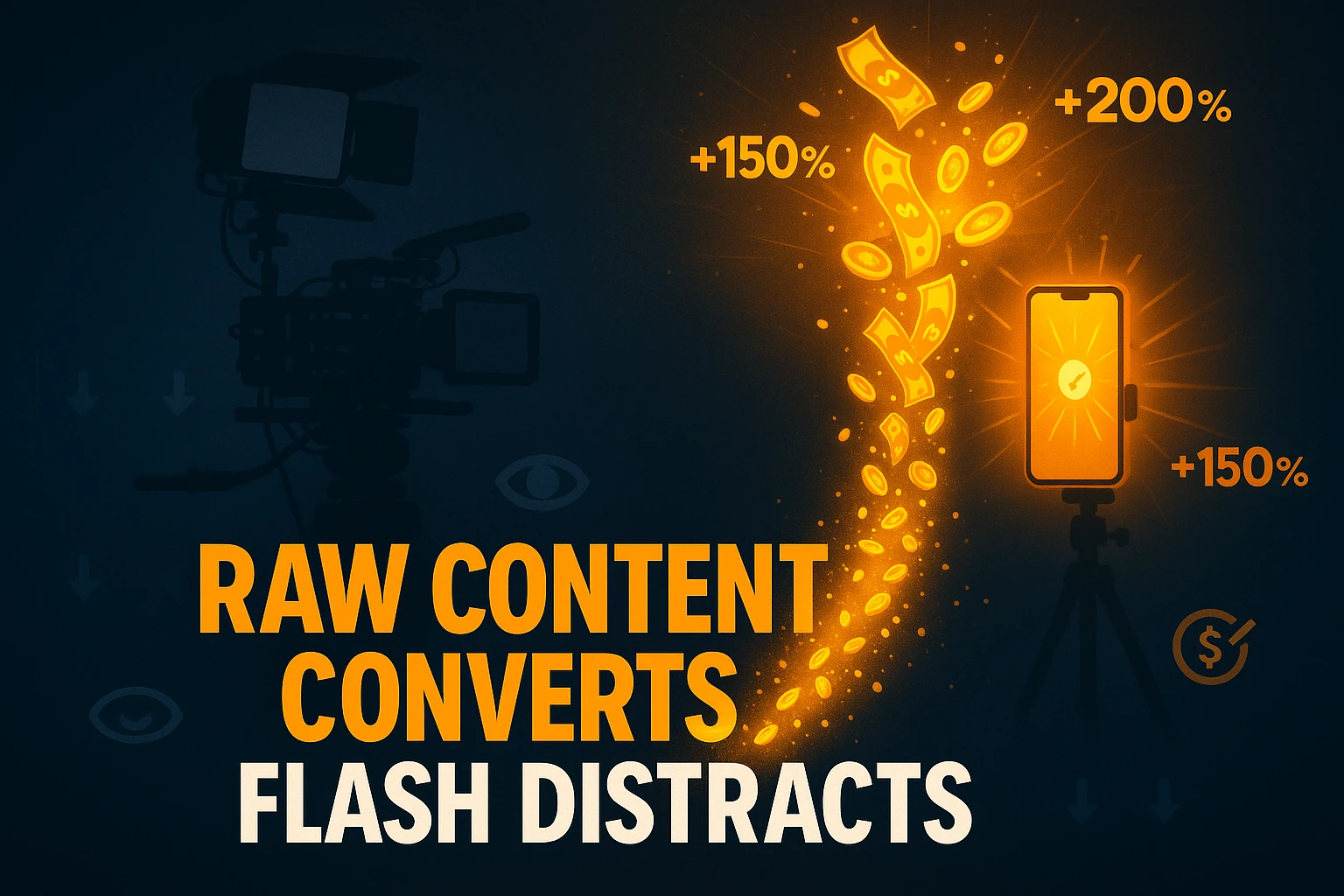
When Hormozi cut all the entertainment elements from his content, something fascinating happened. His views dropped 90%. Most creators would panic. But here's the kicker: his book sales doubled, email opt-ins increased 26%, and value per viewer jumped 68%.
Let me put that in perspective. He'd proven that a smaller audience of the right people beats millions of the wrong viewers every time.
This isn't just one guy's experience. I know a realtor named Dean up in Whistler who gets 2-3 new clients every week from YouTube videos that average under 200 views. He recently closed a $10 million deal directly from someone who found his "boring" market analysis videos. Meanwhile, his competitors are making flashy property tours that get thousands of views but zero qualified leads.
The neuroscience backs this up too. Entertainment distracts. Education convinces. When your brain is processing entertaining content, you're in consumption mode. But educational content? That activates decision-making regions.
So if I were to give you one piece of advice, it would be to start with whatever format feels most natural for your prep style. Love making bullet points? Go with slides. Prefer thinking through concepts visually? Try whiteboards. Want to show your actual work process? Screen shares are your friend.
The first practical step? Stop trying to compete with Netflix. Your customers aren't looking for entertainment, they're looking for solutions. And here's something most people miss: invest in a decent microphone (something simple like a DJI Mic Mini for $60) but keep everything else basic. Bad audio kills credibility faster than any visual imperfection ever will.
The Raw Content Revolution Is Here
Views don't pay the bills. Qualified prospects do.
The content creators who understand this are already pulling ahead while everyone else is still chasing vanity metrics. The shift isn't coming, it's here. The question is whether you'll adapt to what actually works or keep polishing content for people who will never buy from you.
Because at the end of the day, what looks boring to 99% of viewers is exactly what the right 1% is desperately searching for.