Table of Contents
The Five Levels of Creative Diversity: Why Most Meta Advertisers Are Stuck at Level 1 (And Leaving Millions on the Table)
Most brands think they've mastered creative strategy when they're barely scratching the surface
You know that feeling when you finally crack the code on something? That moment when you're running both image and video ads, testing different hooks, maybe even throwing in some user-generated content. You feel sophisticated compared to those brands still stuck with static-only campaigns.
Your performance improves for a few weeks. Maybe even a month. Then... plateau.
More budget doesn't move the needle. Your cost per acquisition starts creeping up. Those winning creatives that felt unstoppable suddenly fall off a cliff, and you're back to spinning your wheels, wondering what happened to your "sophisticated" creative strategy.
Here's the uncomfortable truth: you're probably stuck at Level 1 of a 5-level system that most Meta advertisers never even know exists.
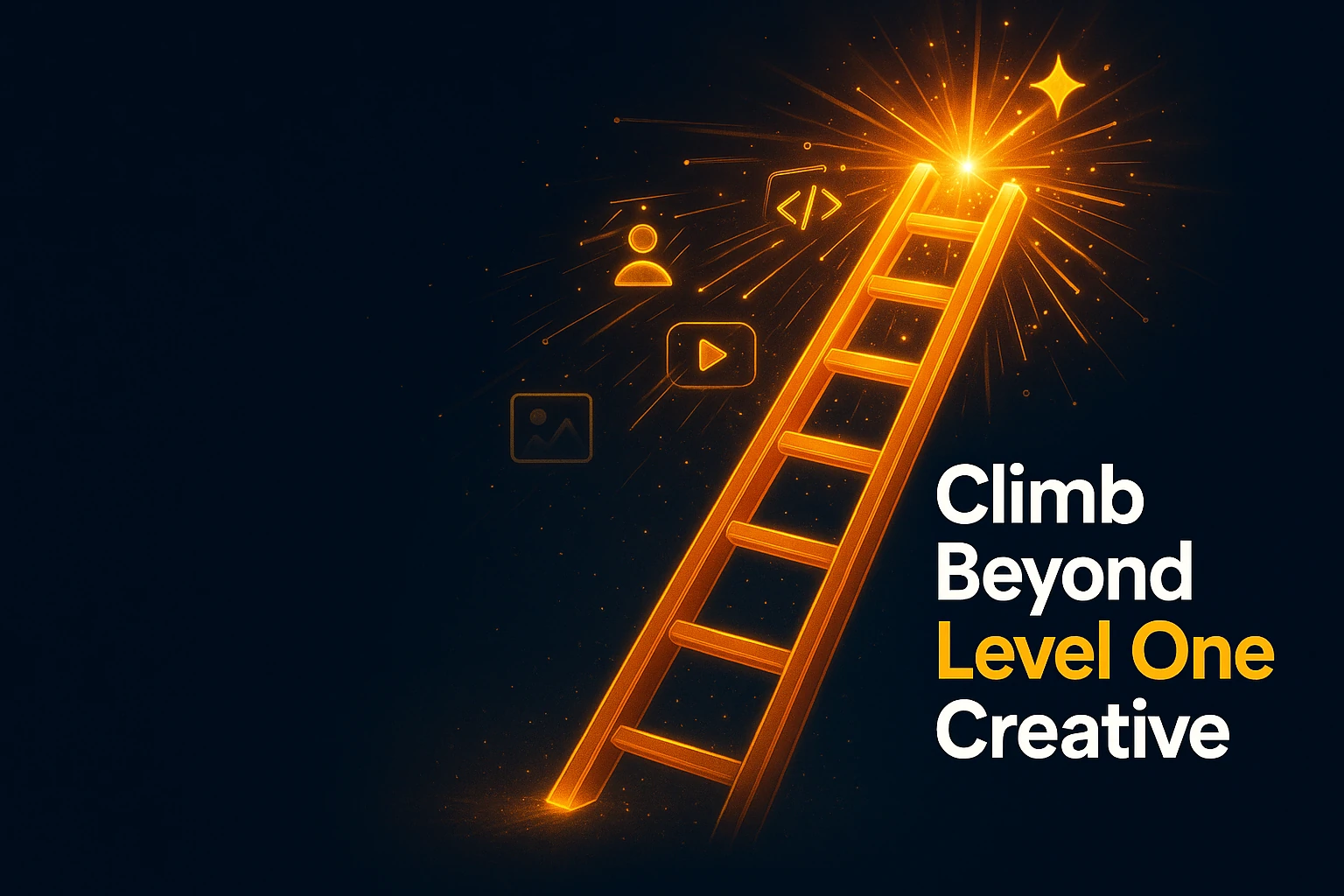
The Creative Diversity Ladder That Changes Everything
I was looking at agency data the other day, and what I found was staggering. Most brands operating what they consider "advanced" creative strategies are actually trapped at the most basic level of true creative diversity. They mistake format expansion for strategic sophistication, and it's costing them millions.
Think about this for a second: if you're only running statics or videos (not both), you're at Level 0. That's the starting line, not even the first milestone. But here's where it gets interesting, and where most brands get stuck.
What does Level 1 actually look like? You've expanded beyond single formats. You're testing images against videos, maybe carousel ads, some UGC mixed in. You feel like you're covering all the bases. The problem is, format expansion is actually where most brands stop, which is why they end up leaving so much money on the table.
But real creative velocity and creative diversity? That's an entirely different beast. Let me walk you through what the other levels actually look like (and why reaching them can literally transform your business overnight).
The second rung involves awareness expansion. This is where you start matching your message to where people actually are in their journey. Ever wonder why some ads perform brilliantly for two weeks then crater? Those are typically product-aware creatives hitting an unaware audience. You're essentially showing the solution to people who don't even know they have a problem yet.
Now here's where things get psychological, and profitable. The third level taps into human desires and motivations. We're talking about the 16 core human desires, the life force 8 principles that drive decision-making. Romance, power, tranquility, social approval. When your creative hits these psychological triggers, people feel like it was made just for them. (And honestly, that's when the magic starts happening with your metrics.)
But the fourth level? That's when you stop thinking about "your audience" and start thinking about audiences, plural. Different personas with completely different use cases for the exact same product.
I know an agency that worked with a skincare brand, let's call it Jones Miracle Bomb. Same product, three entirely different marketing approaches: mommies looking for a quick routine, Gen Z wanting that no-makeup look, millennials worried about aging and dry skin. Same serum. Completely different stories. The results? They were able to tap into profitable personas they never knew existed.
And Level 5? That's when content strategy becomes the heart of everything you do in your business. Not an afterthought, not something you bolt onto your existing operations, but the core strategic engine that drives growth.
Why This Matters Right Now (And What You Can Do About It)
The Andromeda algorithm has changed the game in ways most advertisers haven't caught up to yet. It really prioritizes visual diversity, not just format diversity, but true visual variety that keeps the platform fresh and engaging.
So if I were to give you one piece of advice, it would be to start with an honest audit. Look at your current creative approach and ask: what level am I actually operating at?
Most brands will discover they're at Level 1, thinking they have sophisticated creative diversity when they're really just scratching the surface.
The first practical step? Stop trying to do everything at once. Pick one level above where you currently operate and focus there for the next 30 days.
If you're at Level 1, start mapping your content to customer awareness stages. Create ads for people who don't know they have a problem, and separate campaigns for those ready to buy solutions.
If you're ready for Level 3, audit how many of those 16 human desires your current creative actually addresses. Test angles that hit power, romance, tranquility, see which psychological triggers resonate with your audience.
And for those ready to tackle Level 4: think about who else could use your product in a completely different way. What personas have you been ignoring?
The Bottom Line
Here's what I've learned working with hundreds of campaigns: few unicorn ads come from just format changes. The real breakthroughs happen when brands understand that true creative diversity is about strategic sophistication, not just visual variety.
The gap between basic and advanced creative strategy is widening every day. While most advertisers are stuck debating static versus video, the brands advancing through all five levels are building massive competitive advantages.
Your creative strategy isn't just about making better ads, it's about understanding that content is becoming the heart of everything successful businesses do. Especially as we head into 2026, where organic strategy becomes even more critical.
The question isn't whether you can afford to advance your creative diversity. The question is: can you afford to stay stuck at Level 1 while your competitors climb the ladder?