Table of Contents
The Anchor Asset Strategy: How Smart Teams Create One Video and Build Entire Marketing Campaigns
Stop drowning in content demands. Start thinking like an efficiency expert.
Picture this: You're sitting in a Monday morning meeting, and someone drops the weekly content bomb. "We need fresh content for YouTube, LinkedIn, our blog, our newsletter, and TikTok this week."
The room goes quiet. Hearts sink. Everyone's doing the mental math, five platforms, five unique pieces, deadlines looming. It's that familiar pit-in-your-stomach feeling that every marketer knows too well.
Here's what I've learned after watching teams burn out trying to feed the content beast: You're approaching this completely wrong.
The smartest content teams I know aren't creating five different pieces of content. They're creating one exceptional piece and systematically remixing it across every channel. It's called the Anchor Asset System, and it's the difference between drowning in content demands and actually scaling your reach.
Let me show you how this works in practice. The team at HubSpot's "Marketing Against the Grain" used this exact approach to achieve 148% year-over-year audience growth. With just 3-4 people. (Think about that for a second, a team smaller than most startups, outpacing companies with entire content departments.)
Here's the three-step framework that makes this possible:
Think of your content like a ship's anchor. The anchor itself is heavy, requires significant effort to create, but once it's set, it holds everything else in place. What does this look like in real life? You start with one comprehensive, expert-driven long-form piece of content. Usually video.
Why video first? Because as one HubSpot expert put it, "You probably have 60 minutes of video to get down to that 10 minutes. You have a transcript that you can use for blogs or newsletters or social. There's a lot of assets you can create off of that video." Video is the hardest format to produce, but it yields the most raw material for everything else.
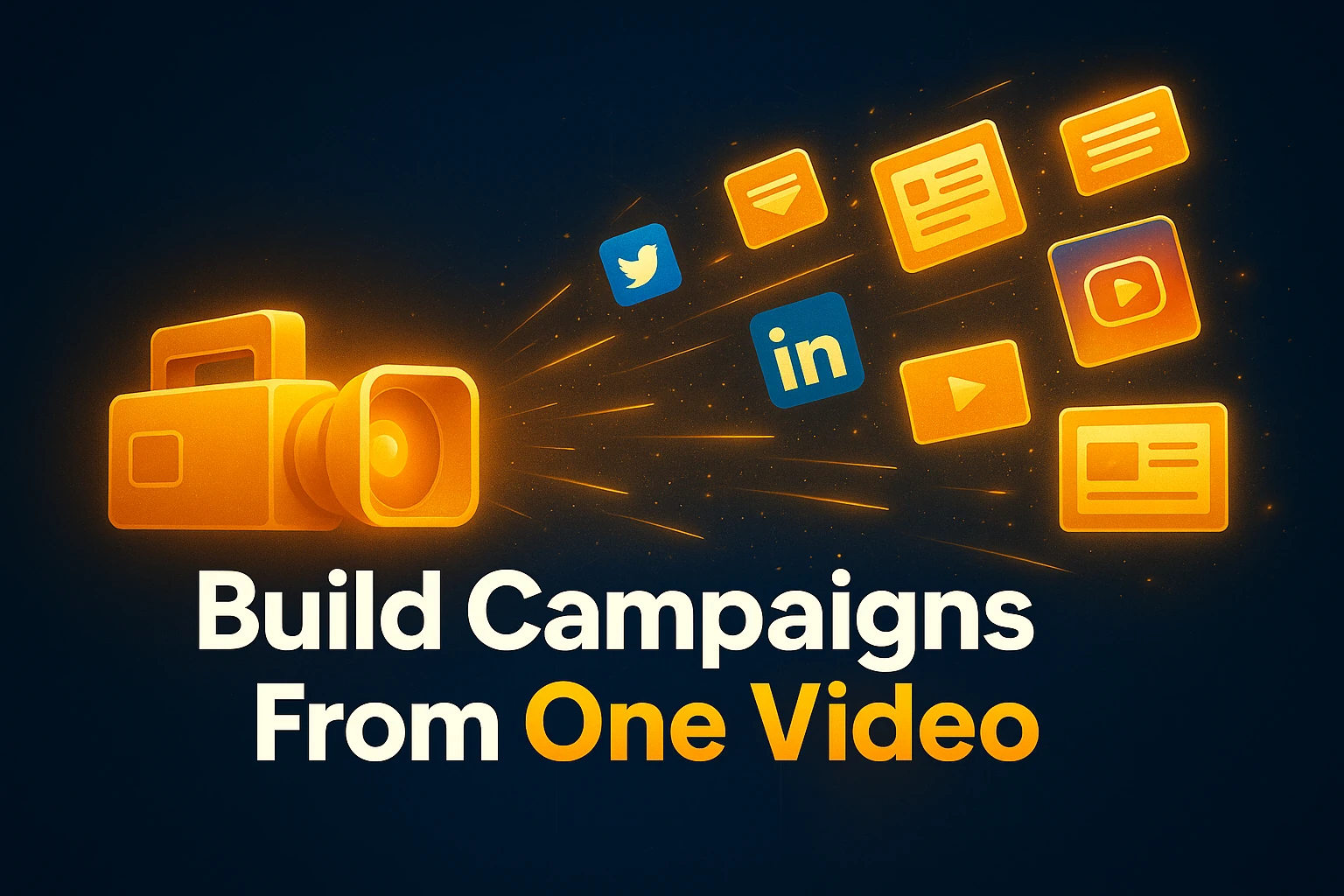
But here's where most teams mess up, they think the hard work ends when the video is done. Wrong. The magic happens in the extraction phase. This is where you systematically pull out every possible asset from that anchor content. Transcripts become blog posts. Key quotes become LinkedIn posts. Interesting statistics become infographics. Framework explanations become carousel posts.
I know a small agency owner in upstate New York who runs a video podcast, newsletter, and active LinkedIn presence with just himself and one contractor. His secret? Every 45-minute expert interview becomes the foundation for six weeks of content across three channels.
The final step is what separates the pros from the amateurs: platform-specific remixing. You can't just copy and paste the same content everywhere (trust me, it won't perform). Each platform has its own unspoken rules, its own rhythm.
As one marketing practitioner told me, "You're taking the essence of something and then you're making it right for the platform. Yeah, you have to. It's the only way it's going to perform."
LinkedIn loves thought-provoking questions and personal insights. YouTube rewards comprehensive tutorials. Twitter thrives on punchy observations. Same core message, different formatting. This isn't optional, it's required for success.
So if I were to give you one piece of advice, it would be this: Stop trying to create original content for every platform this week. Instead, invest in creating one exceptional anchor asset and then remix it strategically.
Choose video if your audience is there (and let's be honest, YouTube is the second-largest search engine, the top streaming platform, and the top podcasting platform). Start with 30-45 minute expert conversations or tutorials. Set up a systematic approach for content extraction using tools like Riverside for automatic transcription.
But here's the reality check: Don't expect results in 3-6 months. This is a sustainable content strategy, not a quick fix. Plan for 9+ months to see real traction. (The best content approaches always require patience.)
The alternative? Keep burning out your team trying to create original ideas for newsletters, LinkedIn posts, YouTube videos, and podcasts. As one overwhelmed marketer put it, "It's unattainable for most teams. Overwhelming. Super overwhelming, expensive."
The anchor asset approach isn't just more efficient, it's more effective. When you concentrate your expertise into one comprehensive piece and then distribute it strategically, you get better quality, consistent messaging, and actually build momentum instead of constantly starting from scratch.
Your content doesn't have to feel like you're drowning. It can feel like you're anchored.