Table of Contents
The 4-Layer Framework That Makes Marketing Content Impossible to Ignore (And Why Most Brands Get Layer 1 Wrong)
Why the ads that stop your scroll aren't the flashiest ones, they're the most intentional
You've skipped thousands of ads this month alone. But there were a few that made you stop scrolling, weren't there? Something triggered your curiosity, and you couldn't help but watch, even though you knew it was an ad trying to sell you something.
That moment wasn't random. It wasn't luck.
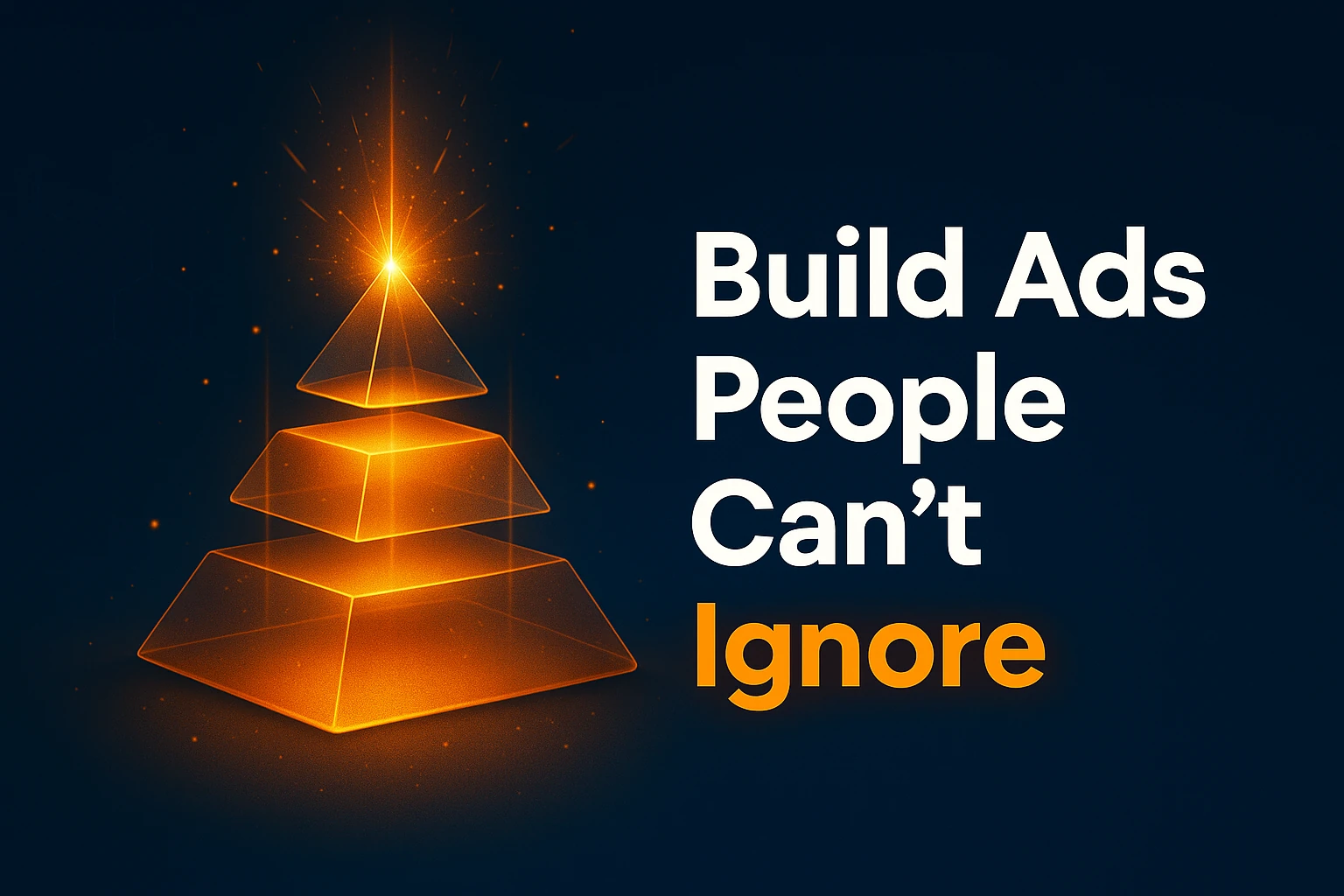
It was the result of what I call the 4-Layer Attention Architecture, and most brands are completely botching the first layer. They think more visual elements equals more engagement. More colors, more text, more everything crammed into those crucial first five seconds.
They're dead wrong.
The Architecture of Unstoppable Content
Here's what I've learned after studying hundreds of high-performing ads: the most effective content doesn't try to do everything at once. Instead, it builds attention systematically, layer by layer, like constructing a building where each floor supports the next.
The foundation? Visual structure and attention control. This is where most brands lose their audience before they even start. Fraser from Fraggle, an ad creative agency with seven years of battle-tested campaigns, puts it perfectly: "The key idea here is to remove any kind of visual chaos and just allow people to focus on one thing."
One thing. Not three things. Not five clever elements competing for eyeballs.
Take the Underbrush gum campaign that achieved exceptional hook rates by using what looked like mysterious rocks (or worse, let's just say they looked questionable). The visual was so unexpected and focused that viewers couldn't help but stay to solve the puzzle. That's strategic simplicity in action.
But here's where it gets interesting, and this is what most marketing advice completely misses. What comes next isn't just about brand familiarity versus organic feel, though that's critical. You need to balance looking like your brand while still feeling natural in someone's feed.
The third layer builds credibility through social context. And here's the psychology that'll change how you think about social proof: it doesn't work because the majority is always right. According to insights from "Start with Why," social proof works because "we fear that we might be wrong" more than we trust that everyone else is right. (That's why customer video testimonials crush text reviews, they reduce that fear of making a bad decision.)
The final layer? Message layering. This is where you build information progressively instead of dumping everything at once. Start relatable, add education, build credibility, then drive action. Each layer answers one question before moving to the next.
Why This Matters More Than Your Creative Budget
I know an agency owner who tested this framework against traditional "creative" approaches. The results weren't even close.
The strategic simplicity ads, the ones following this 4-layer architecture, consistently outperformed the flashy, complex creative. Higher hook rates, lower cost per acquisition, and content that actually worked across multiple platforms instead of being designed for just one.
Here's what you need to audit in your next campaign: Look at your first five seconds and count every element competing for attention. If you find more than one focal point, you've found your problem. Multiple focal points equal no focal points, which equals lost viewers.
For color psychology, use strategic contrast against platform backgrounds. Black content against white feeds still works as a "cheat code" for stopping scroll. Red triggers alerts (perfect for urgency), yellow signals warnings. The Amberin red product campaign amplified lip saturation in their user-generated content because red naturally draws attention, that's psychology-driven creativity, not random creativity.
Social proof needs to happen early, within the first third of your content. Use actual customer videos when possible. And structure your information in progressive layers that match how people naturally make decisions.
The Counterintuitive Truth About Great Ads
At the end of the day, the best ads are obvious ones. They're not the overcomplicated creative pieces that win awards but fail to convert.
Your audience isn't looking for performance theater. They're looking for clear communication that respects their attention and guides them toward a decision without overwhelming them.
If you take one thing from this, let it be this: stop competing on creativity and start competing on psychology. The framework works because it mirrors how human attention actually operates, not how we think it should operate.
The next time you create content, ask yourself, does this guide attention or fracture it? Because that five-second window determines everything that happens next.