Table of Contents
Why Keyword Research is Dead: The Entity Revolution That 99% of SEO Professionals Are Missing
While everyone else is still playing by 2016 rules, Google's algorithm moved on years ago
You know that feeling when you've spent three hours deep in Ahrefs, analyzing keyword difficulty scores and domain authority metrics, cross-referencing search volumes with competition data? That satisfying sense of productivity as you build your comprehensive spreadsheet of target keywords, complete with difficulty ratings and monthly search estimates?
I hate to break it to you, but every single hour you spend in those tools is essentially wasted effort. You're playing a game that ended in 2017.
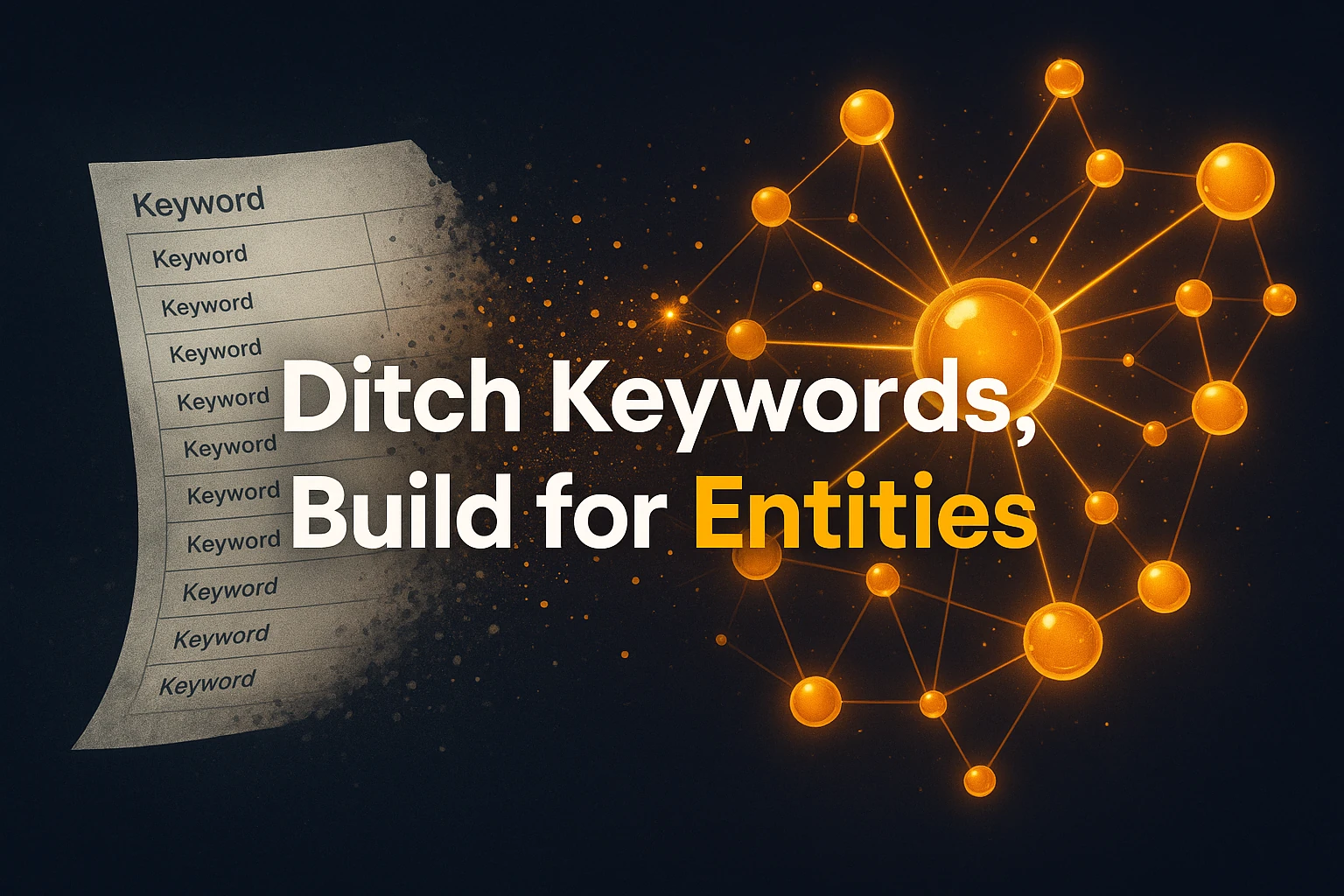
Here's what actually happened (and why 99% of SEO professionals still haven't figured it out): Google fundamentally rewired how their algorithm processes information. The same transformer technology that powers ChatGPT? Google invented it. And when they implemented it in 2017, they stopped reading websites the way they used to, scanning for keyword matches like some glorified word processor from the '90s.
Now Google's algorithm processes information the same way ChatGPT does. It understands entities, not keywords.
The Service Entity Research System: Your New Reality
Think about it like this: when you ask ChatGPT a question, you're not hoping it matches your exact keywords. You're expecting it to understand what you actually need. Google's algorithm works the same way now.
This is where service entity research comes in, and it's going to change everything about how you approach SEO.
The system breaks down into four steps, but let me show you why this matters first. I pulled up a search for "plumber Houston" the other day, and what I found was staggering. Cooper Plumbing ranked #2 with just 488 reviews, while a company with 12,000 reviews sat at #10. Another business with 19,000 reviews didn't even show up in the results.
But here's the kicker: when I searched "water heater installation Houston," completely different businesses appeared. Different results, different rankings, different everything. That's entity separation in action.
So how do you actually implement this? The first step is what I call entity discovery. Forget your keyword tools for a moment. Search for your main service category plus your city, then look at the "People Also Ask" section. Click to expand those questions (this is where the real gold is). "How much does a plumber charge to change a washer?" reveals washer replacement as a distinct service entity that people actually search for.
Next comes the map pack test, my favorite reality check. Open two browser tabs. Search your primary category in one, then test a specific service variation in the other. If you see different businesses ranking, you've found separate entities. Same businesses appearing? That's the same entity in Google's mind.
Here's where most people go wrong: they create bullet point lists on generic service pages. But Google needs dedicated pages for each entity you want to rank for. We're talking specific URLs like "/tankless-water-heater-repair" with matching H1 tags and focused content.
The final piece is schema implementation, the secret sauce that speaks directly to Google's algorithm. Use ChatGPT to generate the structured data markup, validate it with Google's testing tool, and implement it on each service page. This tells the algorithm exactly what service you offer without any guesswork.
The Proof Is in the Rankings (And It's Not What You Think)
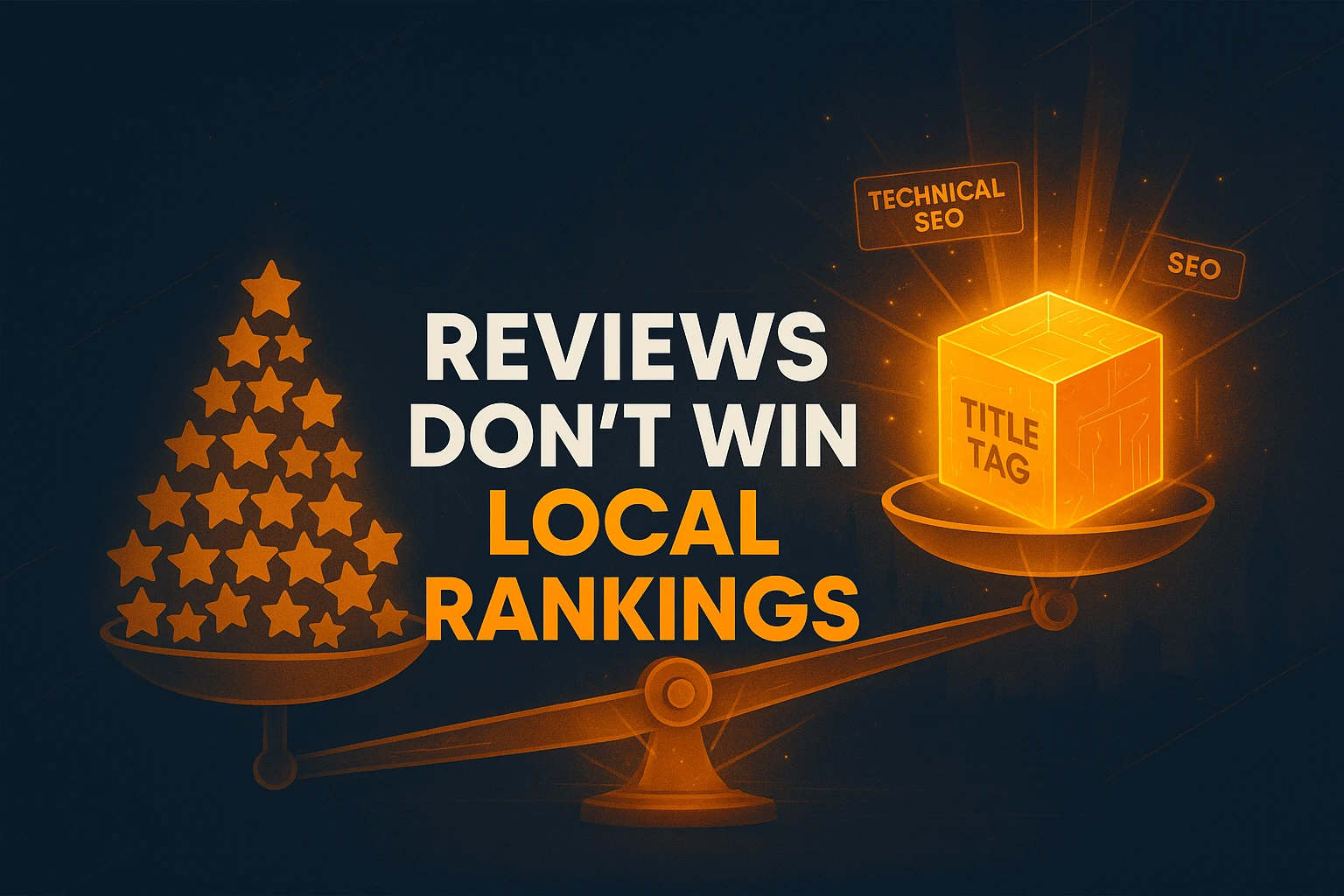
I know an agency owner who scaled to seven figures, and his take has always been brutally honest: "If you ever speak to an agency and they tell you that reviews are important to rank, please, please run the other way."
The numbers back this up. Cooper Plumbing (ranked #2 in Houston) has a domain authority of just 25. Meanwhile, John Moore, with a DA of 69, over 20,000 reviews, and a massive marketing budget, barely shows up in local search results.
This isn't an anomaly. It's the new normal.
What we're really doing here is building a library of answers for every specific problem your market has. You're not hoping for keyword matches anymore. You're creating dedicated resources that align with how Google (and AI systems) actually understand and categorize information.
The practical first step? Stop trying to do everything at once. Pick one service category and run the map pack test today. Search your main category, then test three specific service variations. I guarantee you'll see entity separation happening right in front of you.
The Bottom Line: Adapt or Get Left Behind
Here's the uncomfortable truth: while you've been analyzing domain ratings and keyword difficulty scores, your competitors who understand entity research have been capturing entire service categories you didn't even know existed.
The algorithm changed in 2017. The people still doing traditional keyword research are playing a game that ended years ago. But the opportunity is massive for those willing to adapt, cutting research time from hours to minutes while actually ranking for searches that matter.
Your move.