Table of Contents
The Creative Trap: Why Success Makes Creators Run From What Works (And How to Fight the Urge)
Your artistic instincts might be sabotaging your biggest opportunities
Picture this: You've just created something that absolutely crushed it. Maybe it's a piece of content that went viral, a product launch that exceeded all expectations, or a campaign that had clients calling you non-stop. The results are undeniable, the money is flowing, and everything points to one logical next step: do it again.
So what do you do? If you're like most creative people, you immediately want to try something completely different.
It's like being a musician who finally writes a hit song, then refuses to perform it at concerts because you're "tired of playing the same thing." The audience is screaming for it, but your creative ego is already three albums ahead, chasing the next breakthrough. (And wondering why the venue is half-empty.)
I've been watching this pattern destroy businesses for years, and it's time we called it what it is: creative self-sabotage.
The Creative Success Paradox
Here's what I've noticed happens to creators when something works really well. It's a predictable three-stage cycle that I call the Creative Success Paradox, and it's costing people millions.
The first stage? You have what I call "The Breakthrough." Something works exceptionally well. Take Chummies, a content agency whose Coca-Cola video hit 15 million views. Fifteen million. They combined storytelling, a hunt narrative, a celebrity moment with Jamar Chase, and genuine emotional reaction. Pure gold. Clear proof of concept with measurable results that any smart business would want to replicate immediately.
But then comes the creative rebellion.
This is where your artistic brain starts getting restless. "This worked really well," it whispers, "let's do something different." Creative people feel stifled and choked when they do the same thing over and over again. I get it – I really do. That drive for novelty is exactly what made you creative in the first place. But here's the brutal truth: that same drive becomes your biggest liability once you find success.
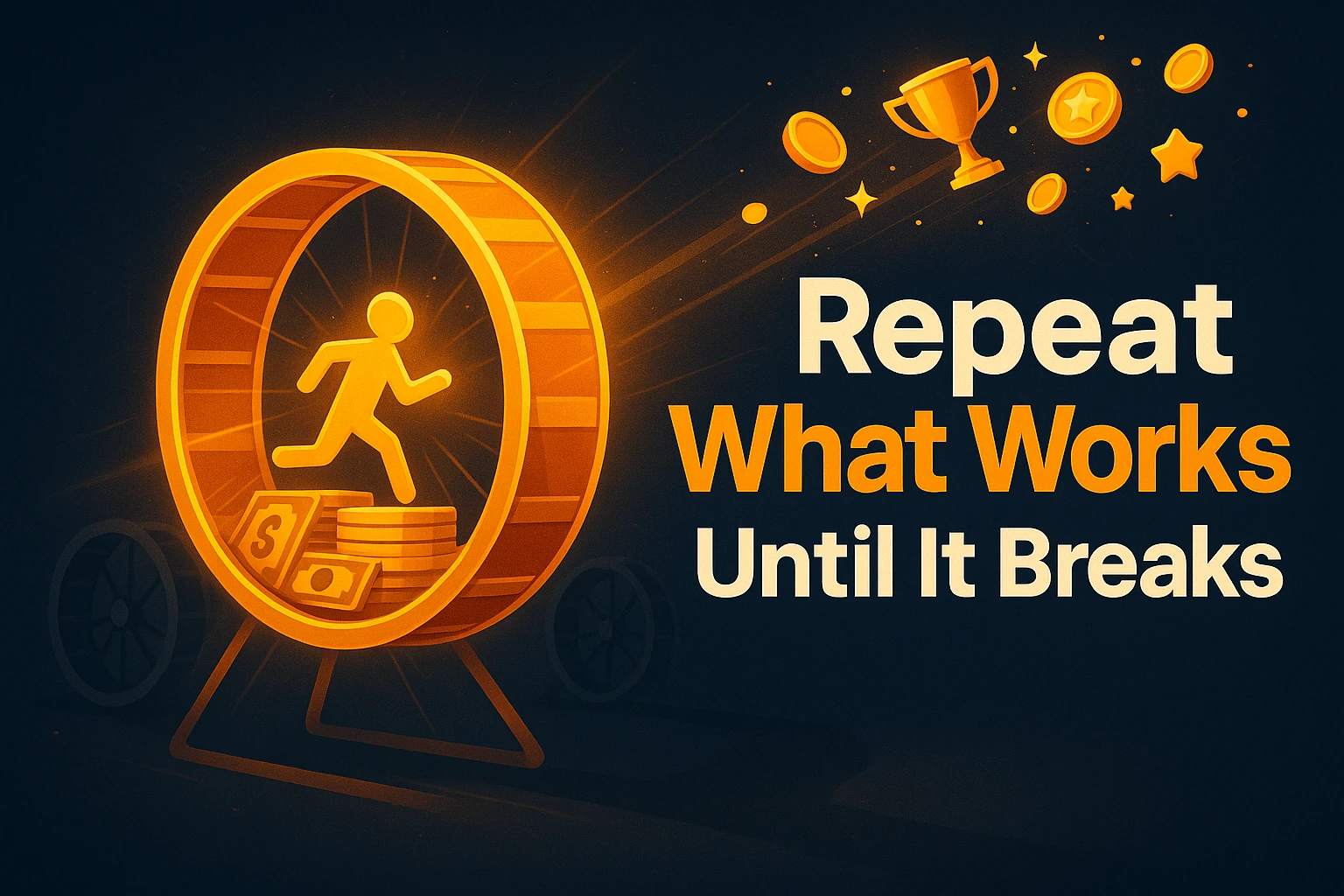
The final stage is what kills me every time: the abandonment. Creators run from their success to chase the next shiny idea, leaving massive money on the table. They don't milk the cow to death – they stop milking it the moment they get bored.
Think about this for a second: Chummies had data showing their top-performing posts (1.6M, 300K, 1M views) all used jersey thumbnails tied to cultural moments, while their average posts barely hit 5K views. The pattern was right there. But instead of asking "How do we change one variable and do the exact same thing again?" most creators would be planning their next "creative pivot."
The Real Cost of Creative Rebellion
I know a content strategist who put it perfectly: "This is the classic symptom of all creative people. This worked really well. Let's do something different."
That sentence should terrify you. Because every time you abandon a proven formula out of boredom, you're not just leaving money on the table – you're starting from zero when you could be building an empire.
Look at what's happening in today's "giving economy." People like "Uncle John" are getting 2 million views building fence content – making more money from documenting their helpful work than from charging for the actual services. The attention economy is more competitive than ever, which makes walking away from proven success formulas absolutely insane.
So here's my advice, and I want you to really hear this: you need to put your creative ego in timeout.
First, audit your hits. Go back through your top 3-5 pieces of performing content and figure out what made them work. Most creators never systematically study their own success, which is like being a chef who never writes down the recipe for their signature dish.
Second, create what I call "success variables." List the specific elements you can replicate while introducing controlled variation. Change one thing at a time while keeping the proven framework intact. If jersey thumbnails work, test different jerseys. If storytelling works, test different stories with the same structure.
Third – and this is the hard one – deliberately repeat your successful formulas until they're truly exhausted, not just until you're personally tired of them. Creative boredom kicks in long before market saturation. Set measurable thresholds for when something is actually "milked dry" rather than just feeling stale to you.
The Bottom Line
Your creativity is not your enemy, but your creative ego might be. The very trait that makes you innovative – that constant hunger for something new – becomes a business trap once you find what works.
As one successful coach told me: "We have to put that person, that personality, in the timeout box and say 'you be quiet right now.'"
Because here's the truth nobody wants to admit: being predictably successful beats being creatively broke every single time. Your audience isn't bored with your winning formula – you are. And that's a million-dollar difference you can't afford to ignore.