Table of Contents
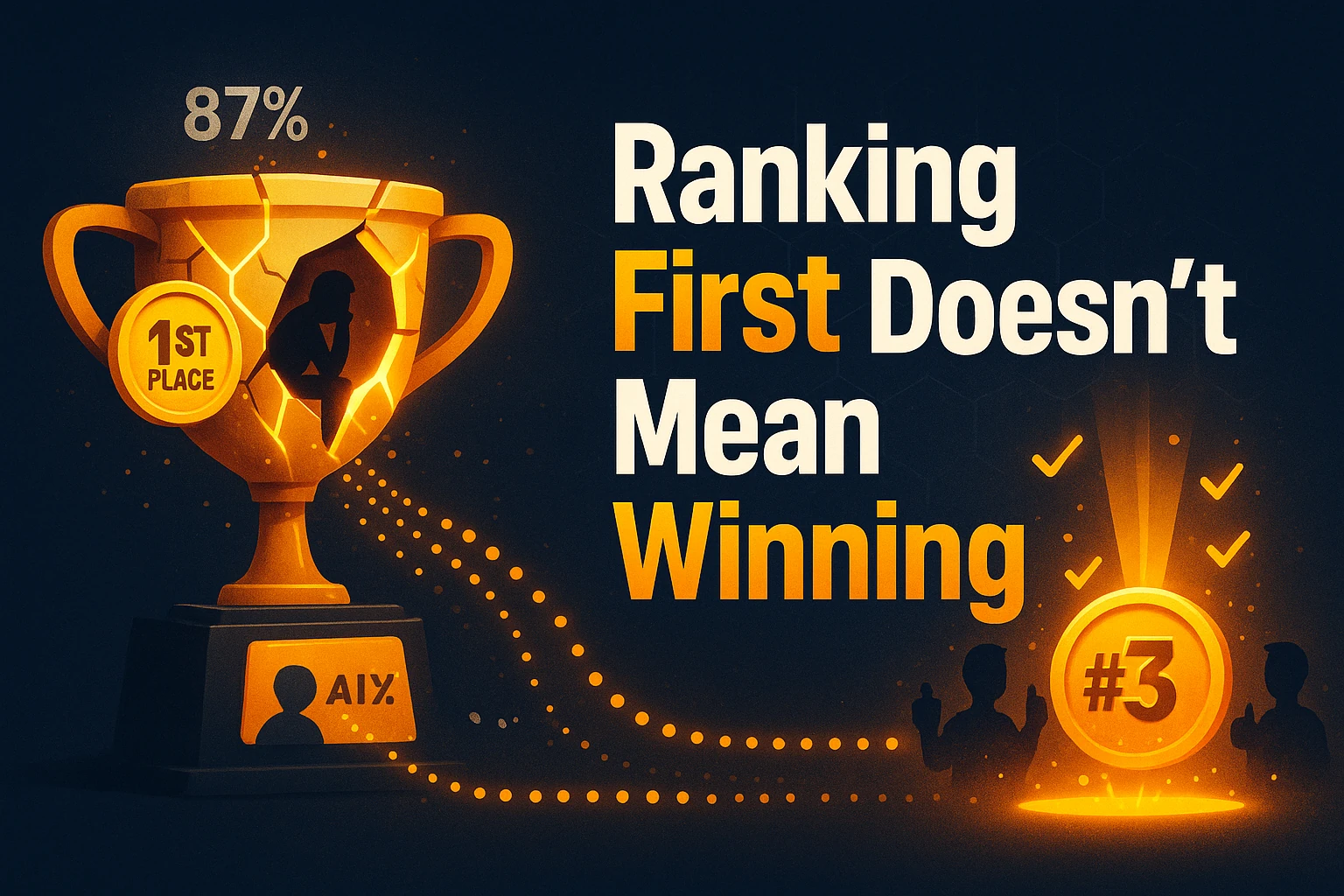
The Review Count Myth: Why a 90-Review Tailor Shop Outranks Global Brands with 4,000+ Reviews
And what this reveals about how local SEO actually works in 2026
You know that sinking feeling when you check Google search results and see a competitor with half your reviews sitting above you in the rankings? You've got thousands of five-star testimonials, they've got maybe a hundred, but somehow Google thinks they deserve the top spot.
I've been running SEO campaigns for local businesses for over eight years now, and this scenario plays out more often than you'd think. Just last week, I was analyzing search results for "tailor Milan" and discovered something that perfectly illustrates why most business owners are chasing the wrong metrics entirely.
A small tailor shop called Sartoria San Babila, with just 90 Google reviews, was consistently outranking global fashion brands like Suit Supply and Lanieri, which had 4,000+ and 350+ reviews respectively. Think about this for a second: a neighborhood shop with 90 customer testimonials beating internationally recognized brands with massive review volumes.
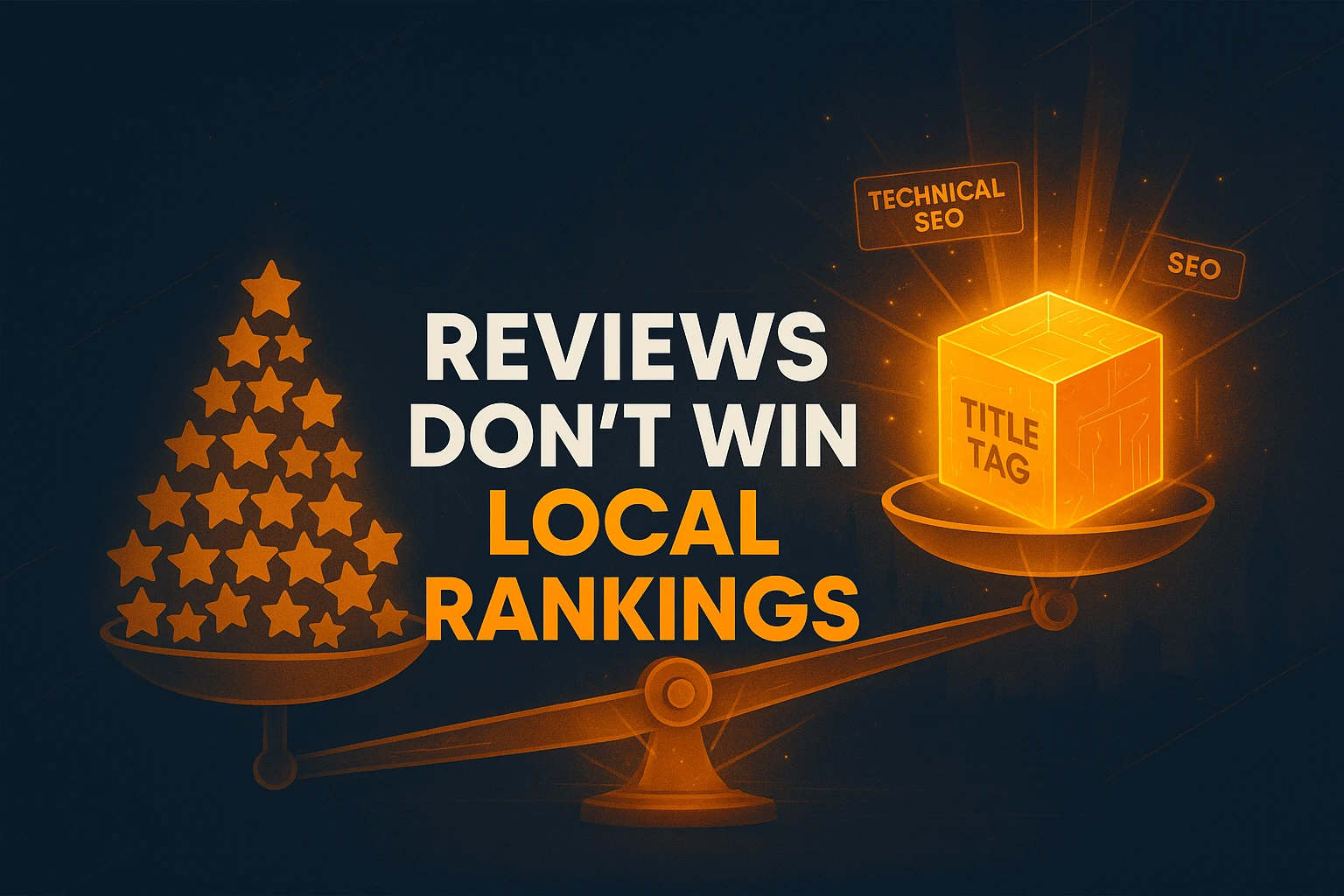
What's happening here isn't an algorithm glitch. It's proof that Google's local ranking system prioritizes technical optimization and relevance over raw social proof numbers. And if you're still obsessing over review count while ignoring the fundamentals, you're fighting yesterday's SEO battle.
The Local SEO David vs Goliath Stack
I call this framework the Local SEO David vs Goliath Stack. In simple terms, it's a three-tier optimization system where small businesses outrank larger competitors by mastering technical foundations, relevance signals, and strategic social proof amplification, in that exact order.
Here's the thing most people get backwards: they start at the top of the stack (chasing reviews) when they should be building from the bottom up.
Think of it like a house. You wouldn't start decorating the living room before pouring the foundation, right? But that's exactly what happens when businesses focus on accumulating reviews while their title tags are a disaster and their Google Business Profile optimization is nonexistent.
The bottom tier, your Technical Foundation, is where the real magic happens. When I audited those Milan tailors, Sartoria San Babila had nailed their title tag: "Tailoring Milan" with perfect keyword alignment. Meanwhile, Lanieri, the global brand with 350+ reviews, was running "Made to measure men's clothing made in Italy", completely missing "Milan" and "custom tailor" keywords.
Can you see the problem? Lanieri was essentially invisible for location-specific searches despite having nearly four times the review count.
The middle tier focuses on Relevance Signals. San Babila strategically included "San Babila Milano" in their Google Business Profile name, capturing neighborhood-specific searches that broader competitors missed. (And honestly, most global brands never think about this level of local targeting.)
What about Social Proof Amplification at the top? Here's where it gets really interesting. Google highlighted "very fast and efficient" from San Babila's reviews for users searching during the 2026 Winter Olympics preparation period. Meanwhile, larger competitors had generic "fabric quality" testimonials that meant nothing to time-pressed Olympic visitors.
As SEO expert Caleb Belulku puts it: "These three have done the best job at optimizing for Google's algorithm, but that doesn't mean they're the best tailor." The ranking game isn't about who's objectively superior, it's about who plays by Google's actual rules.
The Technical Foundation That Everyone Ignores
So what does this mean for your business? Start with your title tag audit today. I guarantee you'll find optimization gaps that are costing you rankings right now.
Your title tag needs exactly two elements: your primary business category plus your city name. Format it as "Primary Category City Name", like "Custom Tailor Milan" or "Digital Marketing Agency Austin." Based on live search analysis, Google weighs title tags heavily for local ranking signals.
Next, examine your primary headings. When you're "rekeying" categories (targeting keywords that don't perfectly match your Google Business Profile category), your H1 tag needs to include your target keyword, primary category, and city name. This helps Google connect your website to your business listing when there's a category mismatch.
Here's a technical detail most people miss: avoid collapsible FAQ sections on your homepage. According to industry knowledge, Google bot renders websites in the most recent version of mobile Chrome, and when content is collapsed, Googlebot can't properly read it. (Which frankly explains why so many "optimized" sites still rank poorly.)
One question I get constantly is whether small businesses can really compete with enterprise brands in local search. Short answer: they have a better chance than ever if they focus on technical foundations instead of just review accumulation.
The opportunity cost of getting this wrong in 2026? You're essentially letting technically superior smaller competitors steal market share while you're busy asking customers for more testimonials. But get it right, and you can see ranking improvements within days to weeks of implementing title tag and heading optimizations.
The Real Local Ranking Factors
The data from that Milan search tells the whole story. Technical optimization beats review volume every single time when the fundamentals are properly executed.
Your next step is simple: audit your own title tag right now. I predict you'll find it's either missing your city name, your primary category, or both. Then check if your most important services are buried below the fold (like "personal style advice" was for some of those Milan shops).
Remember, this isn't about gaming the system, it's about playing by the rules that actually matter while your competitors chase vanity metrics that don't move the ranking needle.