Table of Contents
The Great SEO Extinction: Why 90% of Businesses Are Fighting the Wrong War
And how local winners are quietly taking over while everyone else panics
Picture this: You're watching your blog traffic tank month after month. You're creating more content than ever, hiring writers, optimizing headlines, chasing every SEO trend, but you're running harder just to fall further behind. Meanwhile, that plumber down the street who barely updates his website? He's booked solid for the next three months.
If this sounds familiar, you're not alone. And you're definitely not crazy.
I was looking at some market data the other day, and what I found was staggering. CHEG, the education giant, lost 99% of its market value when ChatGPT started offering their paid service for free. They actually filed an antitrust lawsuit against Google. Think about that for a second, a billion-dollar company nearly wiped out because AI could do what they did, but better and free.
This isn't a market correction. This is an extinction event.
But here's what everyone's missing while they panic about AI overviews and zero-click searches: there's one area where AI can't touch you. Local services.
Why Your Plumber is Outsmarting Your Content Team
AI can write a blog post. AI can code a website. AI can summarize a book. But AI has a good bit of development left before it can come to your house and replace a water heater.
When someone searches for a plumber, they don't want an AI summary. They want a phone number. They want a human who can show up and help them.
This is the massive arbitrage opportunity that 90% of businesses are completely missing. While everyone's fighting a losing war against AI overviews (which now dominate 47% of search results), local search volume is actually growing. The informational SEO game is over, but the local game? That's just getting started.
I've been working with agencies who've completely abandoned the content arms race and gone all-in on what I call the Local Entity Dominance Stack. These aren't the agencies crying about AI, they're the ones quietly taking over entire local markets while their competitors waste resources chasing dying informational traffic.
The Local Entity Dominance Stack: Your AI-Proof Foundation
Google stopped asking, "Does this website say plumber in Houston?" and started asking, "Is this business a real entity connected to this location?" That's the paradigm shift most people are missing.
Think of it like this: In the old days, SEO was like putting up a billboard on the highway. The biggest, loudest billboard got the most attention. But now? It's more like applying for a business license. The AI systems don't just want to know you exist, they want proof you're legitimate, established, and connected to real places with real people.
That's where the three pillars come in.
The foundation starts with your Google Business Profile as your single source of truth. Not just basic optimization, I'm talking about the full treatment. Thirty-plus services listed, primary and secondary categories locked in, everything matching your website structure exactly. This creates what I call a "logic loop" both for the Google algorithm and for the AI models. When everything aligns perfectly, you become an undeniable entity in their systems.
But that's just the beginning. The real magic happens when you start proving your geographic relevance through strategic location pages. Here's what smart agencies do: they overlay their ranking maps with neighborhood maps and build location pages for every area where they're not ranking in the top three. This tells the transformer algorithms that your entity exists physically in those specific areas. No, wait, that's not quite right. The real power is in the coverage, you're essentially staking claims in digital territory while your competitors focus on blog posts that nobody reads anymore.
The third pillar seals the deal through multi-source validation. Join local chambers, get directory listings, sponsor youth sports teams, but here's the critical part: ensure your NAP (Name, Address, Phone) is consistent everywhere. AI platforms trust corroborated data. If Google sees you on the Chamber of Commerce site and ChatGPT sees you on a local directory and your website matches both, you become a trusted entity. One inconsistency? The whole house of cards falls apart.
The Proof is in the Numbers (And the Local Winners Are Already Seeing It)
Princeton University researchers recently found that three specific tactics, authoritative sources, expert quotes, and statistics, produced a 40% visibility increase with transformer models. But here's what's really interesting: Adobe research shows AI-driven referral traffic generates 80% more revenue per visit than traditional organic traffic. Retail sites are seeing 23% lower bounce rates.
Why? Because AI pre-qualifies leads. When someone searches for a plumber and AI recommends you, they're not just browsing, they're ready to buy.
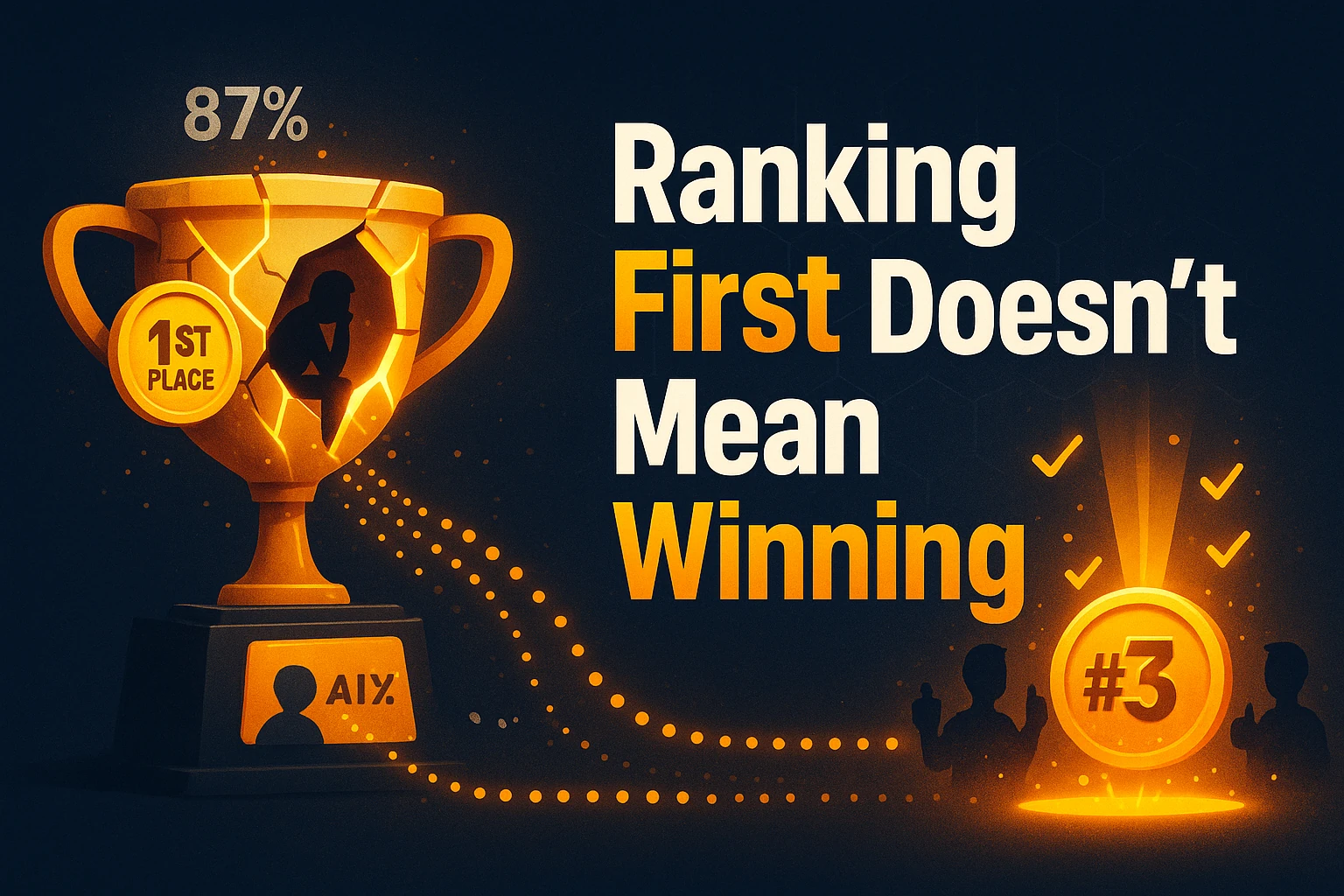
I know an agency owner who made this pivot six months ago. While his competitors watched their informational traffic collapse (we're talking about 88% traffic loss even when ranking #1 for target keywords), he focused purely on local entity building. His client base is now booked solid, and he's charging premium rates because he's delivering actual customers, not just website visitors.
So if I were to give you one piece of advice, it would be to start with your Google Business Profile today. List every possible service you offer, not just your main five or six, but everything. Make it match your website structure exactly. This is your entity foundation.
The first practical step? Stop trying to rank for "how to fix a leaky faucet" and start dominating "plumber near me" in every neighborhood you serve. Use ranking tools to identify gaps, then build neighborhood-specific pages for areas where you're not in the top three. (And track your AI referral traffic in Google Analytics, you can't optimize what you don't measure.)
The Window is Open, But It Won't Stay That Way
Here's the thing about extinction events, they create massive opportunities for those who adapt quickly. While 90% of businesses are still fighting the wrong war, frantically creating more blog content that fewer people will ever see, the local winners are quietly building AI-proof empires.
Google's market share is already recovering. ChatGPT's growth has stalled. The window for early mover advantage is still open, but it won't stay that way forever.
The question isn't whether AI will disrupt your industry, it already has. The question is whether you'll keep fighting a war you can't win, or pivot to the battle you can dominate.
Because AI can't come to your house and replace your water heater. But it can make sure your customers never find you if you don't play by the new rules.