Table of Contents
Why Your SEO Strategy is Backwards: Google Now Punishes 'Engagement' and Rewards 'Goal Completion' Instead
The uncomfortable truth about why keeping visitors on your site longer is actually killing your rankings
Picture this: You're running late for a flight, and you punch "directions to airport" into your GPS. What's the last thing you want? A detailed history of aviation, the Wright brothers' first flight, or fun facts about runway construction.
You want one thing: Get me there. Now.
Yet somehow, when it comes to SEO, we've convinced ourselves that the opposite is true. We think Google wants us to keep people glued to our sites, scrolling through endless introductions and company backstories. We've been dead wrong.
If you're still optimizing for time on site, bounce rate, and pages per session, you're not just wasting your time, you're actively sabotaging your search rankings. And here's why that's happening.
The Goal Completion Framework Changes Everything
Google's algorithm has quietly evolved beyond what most of us realize. While we've been playing engagement theater, Google started caring about something entirely different: whether people actually find what they're looking for.
Think about it like this. When someone searches "personal injury lawyer Houston," they don't want a warm welcome message or your founding story. They want to know why they should hire you. Right now. Above the fold.
The Goal Completion Framework works on three levels, and I've seen this transform businesses when they get it right:
- First paragraph optimization is where Google's natural language processing does its heavy lifting. This isn't just about keywords anymore, it's about intent matching. When I analyzed the top 3 results for "Personal injury lawyer Houston" (one of the most competitive local search terms you'll find), every single top-ranking site immediately answered "Why hire personal injury attorneys?" with specific reasons. No fluff. No history lessons.
- The site ranking 20th? Started with when the firm was founded.
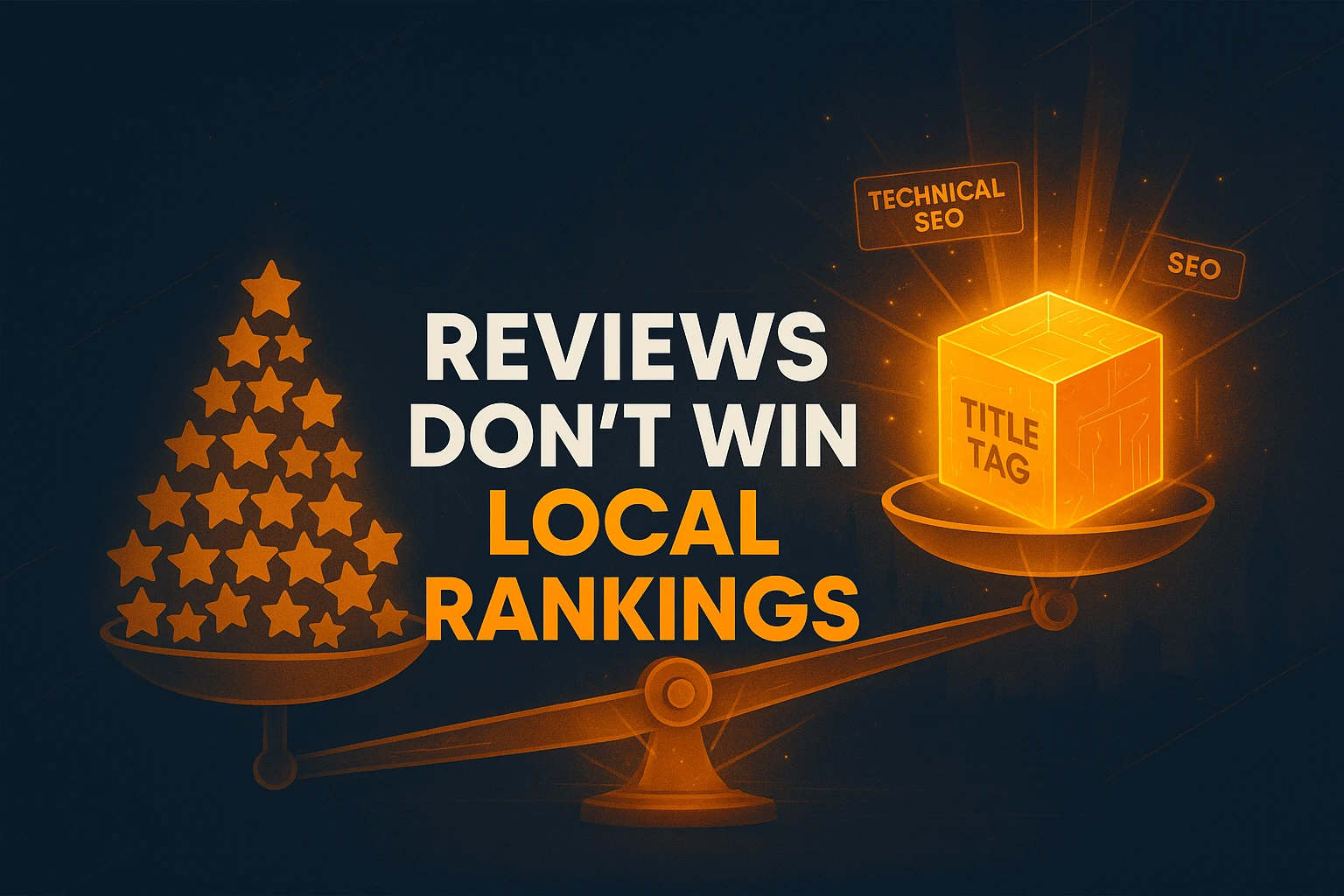
What happens next might surprise you, title tag alignment becomes your secret weapon. I looked at 100 local business websites recently, and over half were using "Home" or just their business name as the title tag. Think about this for a second: that's like putting up a billboard that just says "Billboard" instead of what you're actually selling.
Your title tag must match what people are actually searching for, not what looks pretty in your brand guidelines.
Finally, H1 tag reinforcement ties it all together. Your primary heading should echo your title and first paragraph, creating a coherent message that makes sense to both users and Google's crawlers. All three elements telling the same story consistently.
Here's what I find fascinating: Google has access to a mind-boggling amount of data through Chrome browser usage. (Ever wonder why they gave that away for free?) They know exactly how users behave after landing on your site. And what they've discovered is revolutionary.
The Proof Is in Your Analytics Right Now
An SEO expert who built a seven-figure agency using this insight put it perfectly: "Google doesn't care if people stay on your site. Google does care if people stop searching after they land on your site."
That sentence should fundamentally change how you think about SEO success metrics.
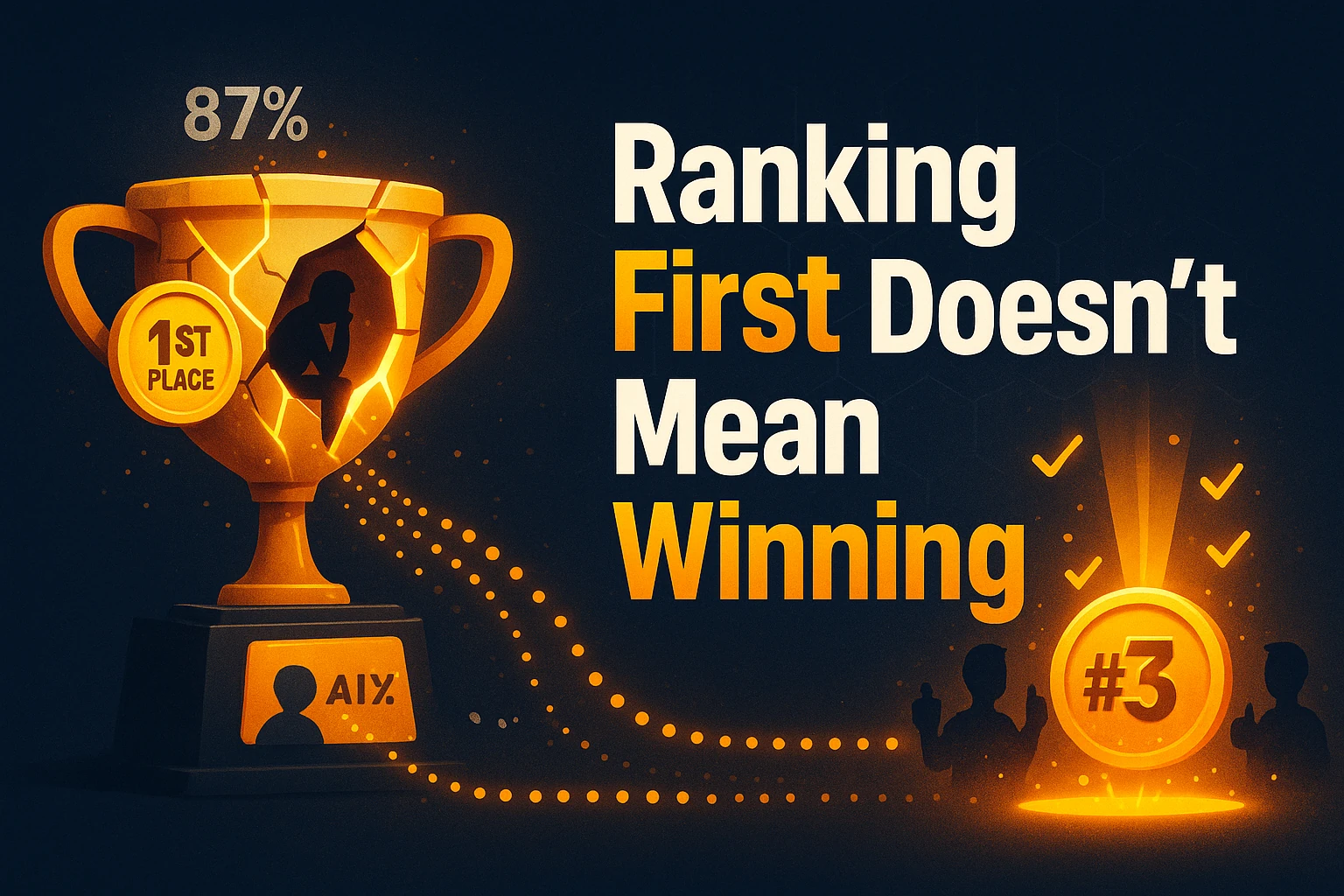
We used to optimize for time on site, bounce rate, pages per session. We wrote long, "sticky" intros because we thought keeping visitors around longer signaled relevance to Google. But Google realized something we missed: a user spending 5 minutes on a page often meant the user was confused, not engaged.
The back button became the strongest negative signal you can send Google.
So what does this look like in practice? Let me give you three immediate action steps that you can implement today:
- Start with a brutal audit of your first paragraph. If you're opening with "Welcome to..." or company history, you're failing the intent matching test. Google's looking for answers, not introductions.
- Next, fix your title tags. Stop using "Home" or just your business name. Use actual keywords that match what your customers are searching for. This alone gives you an advantage over half your local competitors.
- Finally, make sure your H1 tag reinforces your title and first paragraph message. The coherence between these three elements creates a clear signal about your page's purpose.
The Window Won't Stay Open Forever
Here's what keeps me up at night: this shift has already happened. While most businesses are still optimizing for yesterday's algorithm, smart competitors are gaining ground with goal completion strategies.
As John Mueller from Google said, "You don't need 2,000 words to answer the question, 'What time is the Super Bowl?'" Answer first, context later.
The businesses that figure this out now get an immediate competitive advantage. The ones that don't? They'll keep wondering why their rankings are slipping while their competitors climb.
Your GPS doesn't give you a history lesson before showing you the route. Your website shouldn't either.